
NEW ZEALAND
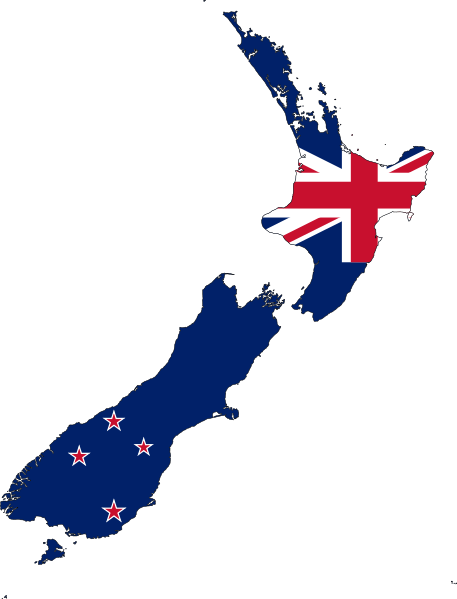
Continent: Oceania
Official name: New Zealand – Aotearoa (“the land of the long white cloud”, the Māori name for the country).
Form of government : Parliamentary monarchy.
Head of State : King Charles III, represented since 21 October 2021 by the Governor-General of New Zealand, Ms Cindy Kiro.
Head of Government: Mr Chris HIPKINS, Prime Minister.
Area : 269 652 km²
Currency : New Zealand dollar (NZD)
Population (2023) : 5.2 million inhabitants
Capital: Wellington
Main cities: Auckland, Christchurch, Dunedin, Hamilton
Official languages: English, Māori
Language in common use : English (96 %), Māori (4 %)
- Agreements and conventions
The two (02) countries cooperate mainly at the multilateral level, notably within the framework of the World Trade Organization (WTO) and the United Nations.
Furthermore, in its 2021-2025 government work programme, Côte d’Ivoire has embarked on expanding its diplomatic network. The Ivorian authorities have sought to establish Côte d’Ivoire’s presence in the Pacific and Oceania region. This policy aims to attract many foreign investors, gain access to new markets to strengthen trade flows, and gain access to new financial markets.
It should be recalled that the President of the Republic, H.E. Alassane OUATTARA, granted an audience to Mr John KEY, Prime Minister of New Zealand, during the United Nations General Assembly in September 2013. However, before this audience, a New Zealand envoy had been sent to the President of the Republic in April 2013 to seek Côte d’Ivoire’s support for New Zealand’s candidacy for a non-permanent seat on the United Nations Security Council for the 2015-2016 period.
- Trade and social cooperation
New Zealand has established an aid programme for Africa. This aid programme focuses on encouraging sustainable economic development. Although its influence is limited, the programme is appreciated. Through this programme, the New Zealand Government remains committed to supporting developing countries, reducing poverty and bringing tangible improvements to people’s lives. It covers four areas, namely agriculture, renewable energy, business, education and training.
In addition, New Zealand regularly contributes to humanitarian aid programmes. Other contributions include emergency food aid, support for livelihoods and funding for United Nations trust funds established to support African Union missions.
A. The main products exported are: rubber, cashew nuts, raw cotton, timber, processed cocoa, essential oils and plastic products.
B. The main products imported are : plastics, road transport equipment, iron and steel, mechanical machinery, motor vehicles, and fresh fruit and vegetables.
Sources : DGE
- La valeur des échanges bilatéraux a atteint 19,42 milliards de FCFA en 2024, contre 15,37 milliards FCFA en 2023;
- Sur la période 20120-2024, la valeur moyenne des exportations ivoiriennes s’est élevée à 0,7 milliards de FCFA/an contre 13,3 milliards de FCFA/an pour les importations ;
- Sur cette même période, la balance commerciale est restée déficitaire pour la Côte d’Ivoire.