Information and Promotion Portal for the Economy of Côte d’Ivoire
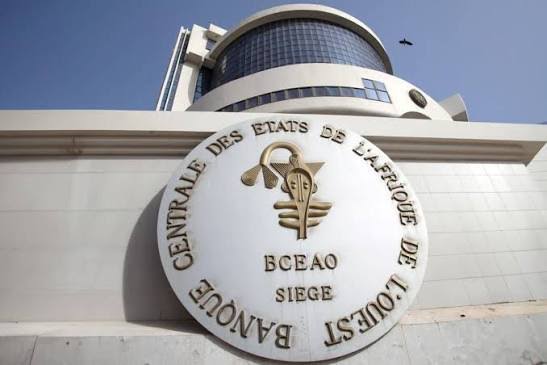

IMF and Côte d’Ivoire Reach Staff-Level Agreement on the Sixth Review of the ECF/EFF (MEDC/FEC) Arrangements and the Fifth Review of the RSF (FRD) Arrangement
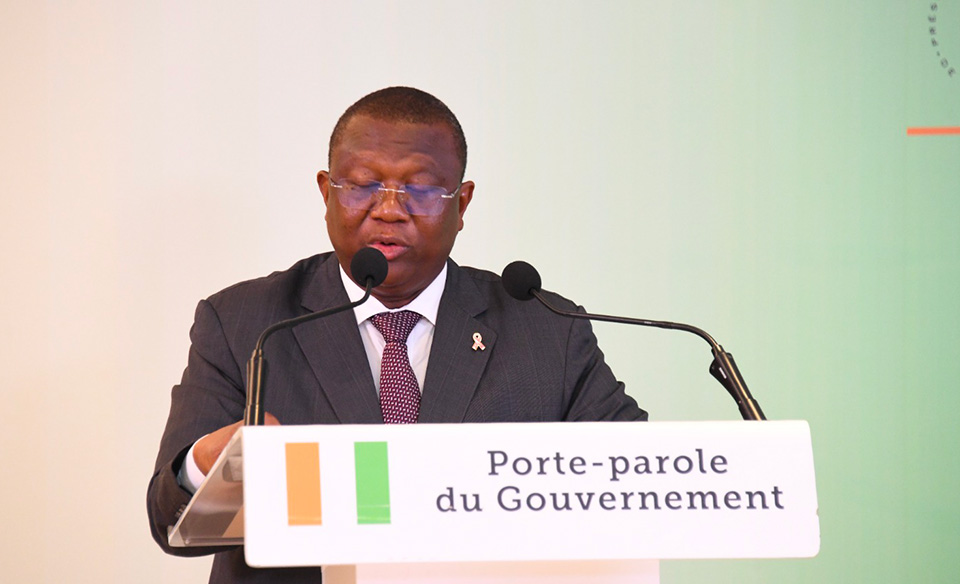
IMF and Côte d’Ivoire Reach Staff-Level Agreement on the Sixth Review of the ECF/EFF (MEDC/FEC) Arrangements and the Fifth Review of the RSF (FRD) ArrangementIMF staff and the Ivorian authorities have reached a staff-level agreement on the sixth review under the arrangements of the Extended Credit Facility (ECF/FEC) and the Extended Fund Facility (EFF/MEDC), as well as on the fifth review of the arrangement under the Resilience and Sustainability Facility (RSF/FRD).The authorities have successfully achieved their main economic objectives, notably the reduction of macroeconomic imbalances and the contribution to the rebuilding of regional reserves, and have made progress in economic transformation, as well as in implementing their adaptation and mitigation reforms to strengthen climate resilience.Subject to the completion of the reviews by the IMF Executive Board, these arrangements should give rise to two disbursements totaling approximately US$843.9 million, of which US$509.5 million under the ECF/EFF arrangements and US$334.4 million under the RSF.Abidjan, Côte d’Ivoire: An International Monetary Fund (IMF) team, led by Ms. Geneviève Verdier, met with the Ivorian authorities from April 22 to 30 to assess progress under the programs supported by the ECF, the EFF and the RSF. The mission is part of the sixth and final review under the ECF/EFF arrangements approved by the IMF Executive Board on 24 May 2023 for a total amount of SDR (DTS) 2.6 billion (about US$3.5 billion). It is also part of the fifth and final review under the RSF arrangement concluded on 15 March 2024 for an amount of SDR 975.6 million (about US$1.3 billion). At the conclusion of the mission, Ms. Verdier made the following statement:“Performance under the ECF/EFF and RSF programs has been remarkable. Following in-depth and constructive discussions with the Ivorian authorities, a staff-level agreement was reached both on the assessment of program performance and on the short- and medium-term economic policy objectives aimed at preserving macroeconomic gains. Thanks to increased revenue mobilization and tight control of public spending, the fiscal deficit was brought down to 3% of GDP in 2025, in line with the convergence criterion of the West African Economic and Monetary Union (WAEMU). The authorities have also recorded significant progress in implementing structural reforms, notably the consolidation of the Treasury Single Account, which helps improve cash management, as well as the strengthening of the governance of public entities to reduce the risks of money laundering and terrorist financing.Regarding the RSF, discussions focused on the implementation of the reforms planned under this review, notably the introduction of a climate-risk insurance scheme for the cotton sector, the reduction of greenhouse gas emissions and the development of a carbon taxation strategy. As regards the outlook, the conflict in the Middle East and the reorientation of trade policies represent a major exogenous shock, likely to lead to a lasting rise in international prices and in the prices of several commodities, a slowdown in global demand and a further tightening of financial conditions.Despite an uncertain international environment, the Ivorian economy remains resilient. Growth is expected to reach 6% in 2026, compared with 6.5% in 2025, owing to a slowdown in demand and investment due to uncertainty. However, inflation would accelerate to 3.3% in 2026 from 0.1% in 2025 under the combined effect of rising international prices for oil and fertilizers, as well as supply chain disruptions. The current account deficit is also expected to widen to 2.2% of GDP in 2026, from 0.7% in 2025, in connection with the war in the Middle East and the deterioration in the terms of trade. Thanks to the good performance of exports, notably crude oil and gold, and to broader access to international financial markets, regional official foreign exchange reserves have strengthened to reach about 8 months of imports at end-March 2026.Depending on how the conflict evolves, the fiscal deficit could widen beyond 3% of GDP. In this context, the introduction of measures to support tax revenue, as well as the implementation of temporary and targeted measures to protect vulnerable populations, will be essential to contain its impact. The authorities stand ready to take all necessary measures to preserve the gains of recent years and to reduce the fiscal deficit to the WAEMU norm of 3% of GDP by 2028, depending on the duration of the conflict in the Middle East and in the absence of any other shock. The continued implementation of the Medium-Term Revenue Mobilization Strategy, focused on broadening the tax base and strengthening tax compliance, should raise tax revenue from 14.9% in 2025 to 18% of GDP in the medium term. This effort will be crucial to finance increased spending in priority social sectors and infrastructure, in line with the National Development Plan (PND) 2026-2030.”The medium-term outlook remains broadly favorable, despite a difficult international context marked by geopolitical tensions. Growth is expected to average 6.7%, while inflation would return below the regional target of 3%. The country’s risk of debt distress will thus remain moderate. The uncertainty surrounding global policies, geopolitical tensions, regional insecurity and Côte d’Ivoire’s high vulnerability to climate shocks nevertheless call for heightened vigilance on the part of the authorities.”The IMF team met with His Excellency Mr. Tiémoko Meyliet Koné, Vice-President of the Republic; His Excellency Mr. Robert Beugré Mambé, Prime Minister; Mr. Adama Coulibaly, Minister of the Economy, Finance and the Budget; Mr. Sangafowa Coulibaly, Minister of Mines, Petroleum and Energy; Mr. Souleymane Diarrasouba, Minister of Planning and Development; and senior government and BCEAO officials, as well as representatives of the private sector and development partners. IMF Communications DepartmentMEDIA RELATIONSPRESS OFFICER: Kwabena Akuamoah-BoatengPhone: +1 202 623-7100Email: [email protected]
IMF Executive Board completes the fourth reviews of the EFF/ECF (MEDC/FEC) arrangements and the third review of the RSF (FRD) arrangement for Côte d'Ivoire.
IMF Executive Board completes the fourth reviews of the EFF/ECF (MEDC/FEC) arrangements and the third review of the RSF (FRD) arrangement for Côte d'Ivoire.The IMF Executive Board today completed the Fourth Reviews of Côte d’Ivoire’s Extended Fund Facility (EFF/MEDC) and Extended Credit Facility (ECF/FEC) Arrangements and the Third Review of the Resilience and Sustainability Facility (RSF/FRD) Arrangement. The decision allows for an immediate disbursement of about US$758 million.Program implementation has been strong, with all end-December 2024 performance criteria and structural benchmarks met satisfactorily under the EFF/ECF (MEDC/FEC) program, and all climate-financing reform measures completed under the RSF (FRD) arrangement.The authorities' ongoing commitment to reforms is expected to support Côte d'Ivoire's sustainable transformation toward upper middle-income status over the medium term, while strengthening economic resilience to climate-induced shocks and maintaining balance of payments stability.Washington, DC, 25 June 2025. The Executive Board of the International Monetary Fund (IMF) completed the fourth reviews of the Extended Fund Facility (EFF/MEDC) and Extended Credit Facility (ECF/FEC) arrangements and the third review of the Resilience and Sustainability Facility (RSF/FRD) arrangement for Côte d'Ivoire.The EFF/ECF (MEDC/FEC)-supported program approved in May 2023 in the amount of SDR (DTS) 2,601.6 million (equivalent to 400 percent of quota or about US$3.6 billion), has substantially reduced imbalances and safeguarded a moderate risk of debt distress rating, while important reforms under RSF (FRD) arrangement for a total amount of SDR975.6 million (equivalent to 150 percent of quota or about US$1.3 billion) are contributing to prospective balance of payments stability and economic resilience to climate-induced shocks. The authorities’ ongoing commitment to reforms under both programs should support Côte d’Ivoire’s sustainable transformation toward upper middle-income status over the medium-term. Program implementation has been generally strong thus far, with all end-December performance criteria met and implementation of structural benchmarks being satisfactory. Moreover, all reform measures under the RSF (FRD) arrangement for this review with a focus on climate-financing architecture were implemented. The completion of the reviews allows for an immediate disbursement of about US$758 million under the multi-year Fund arrangements.Côte d’Ivoire’s resilient economy has consolidated its role as an anchor of stability in the region against a still difficult global backdrop. Amid a recovery in agricultural production, favorable terms of trade and rising household incomes growth is expected to pick up in the near term. The medium-term outlook also remains favorable as economic fundamentals strengthen further and the hydrocarbon and mining sectors add to broad-based growth. Risks are broadly balanced. For 2025, growth is projected to be 6.3 percent, while average inflation is expected to return to within the 1 to 3 percent WAEMU target range. The 2025 current account deficit is projected to narrow to 3.6 percent of GDP, and the fiscal deficit is expected to meet the WAEMU deficit ceiling of 3 percent of GDP.The authorities remain firmly committed to boosting tax revenue in the medium term, and to implementing the medium-term revenue strategy (MTRS/SRMT) approved in May 2024. Sustained effort is expected by the authorities to increase tax revenue to GDP by 0.5 percent of GDP, each year through 2026 and reach approximately 20 percent of GDP over the medium-term through self-sustaining tax policy and tax administration reforms.Important structural reforms continue to focus on improving the business climate and increasing the involvement of the private sector in the country’s development. To this end, enhancements in the transparency and accountability of public enterprises, further strengthening governance and financial integrity (particularly the AML/CFT framework), along with investment in human capital, broader financial inclusion, and climate resilience, to support higher productivity growth will be instrumental.Following the Executive Board discussion, Mr. Okamura, Acting Chair and Deputy Managing Director, made the following statement:« Côte d’Ivoire’s performance under the IMF-supported programs has been strong, reflecting the authorities’ commitment to strengthening macroeconomic stability. Sustained reform efforts will help safeguard fiscal and debt sustainability and consolidate the country’s role as an anchor of regional stability.« Continued fiscal consolidation envisaged in the 2025 budget will be underpinned by high-quality and permanent tax policy measures, as well as tax and customs administration reforms. These measures will support bringing the fiscal deficit to 3 percent of GDP by 2025, in line with the WAEMU ceiling, and help reduce the country’s debt sustainability risks.« Sustaining domestic revenue mobilization over the medium-term remains a priority to generate the fiscal space needed to finance social and development spending and support a deeper economic transformation toward upper middle-income status. To this end, implementation of the Medium-term Revenue Mobilization Strategy (MTRS) will continue to require significant engagement with stakeholders to ensure buy-in for the needed overhaul of the tax system and the streamlining of VAT tax exemptions and other tax expenditures.« Preserving fiscal space will be aided by the authorities’ commitments to enhance the coverage, transparency, and management of public finances. The authorities’ continued active debt management remains critical in safeguarding debt sustainability. Sustaining structural reform momentum and continuous improvements in safeguarding financial integrity and governance are important for unlocking the private sector’s potential.« Addressing the shortcomings of the AML/CFT framework and demonstrating an implementation track record is critical. Further investment in human capital development, especially among young people and women, along with the reduction of informality, will make growth more inclusive. Continued efforts to strengthen resilience to climate shocks will also be important for a sustainable transformation of Côte d’Ivoire’s economy. »Côte d’Ivoire: Selected Economic Indicators (2022‐26)Population (2021): 29 millionGini index (2018): 37.3GDP per capita (2021): US$2,445 Life expectancy (2020): 60 yearsPercentage of the population below the poverty line (2021): 37.5%20222023202420252026 Prel.Proj.Proj Output Real GDP growth (in %)6.46.56.06.36.4Prices Inflation (in %)5.24.43.53.02.2Central government finances Revenue (in % of GDP)14.615.415.917.017.5Expenditure (in % of GDP)21.921.320.420.420.9Fiscal balance (in % of GDP)-6.7-5.2-4.0-3.0-3.0Public debt (in % of GDP)56.057.559.358.156.5Money and credit Broad money (change in %)9.03.313.613.19.4Credit to the private sector (change in %)7.316.211.610.510.6Balance of payments Current account (in % of GDP)-7.6-8.2-4.2-3.6-2.1FDI (in % of GDP)2.01.73.83.83.3WAEMU reserves (in months of imports)4.13.54.6……External debt (in % of GDP)34.135.537.636.135.6Exchange rate Real effective exchange rate (change in %, depreciation -)-4.94.42.5……Sources: Ivorian authorities; IMF staff estimates; World Bank. IMF Communications DepartmentMEDIA RELATIONSPRESS OFFICER: Kwabena Akuamoah-BoatengPHONE:+1 202 623-7100EMAIL: [email protected] VERSIONPRESS RELEASE NO. PR25/220IMF Executive Board Completes the Fourth Reviews of the EFF/ECF Arrangements and the Third Review of the RSF Arrangement for Côte d’Ivoire.The IMF Executive Board today completed the Fourth Reviews of Côte d’Ivoire’s Extended Fund Facility (EFF) and Extended Credit Facility (ECF) Arrangements and the Third Review of the Resilience and Sustainability Facility (RSF) Arrangement. The decision allows for an immediate disbursement of about US$758 million.Program implementation has been strong, with all end-December 2024 performance criteria and structural benchmarks met satisfactorily under the EFF/ECF program, and all climate-financing reform measures completed under the RSF arrangement.The authorities' ongoing commitment to reforms is expected to support Côte d'Ivoire's sustainable transformation toward upper middle-income status over the medium term, while strengthening economic resilience to climate-induced shocks and maintaining balance of payments stability.Washington, DC: The Executive Board of the International Monetary Fund (IMF) completed the Fourth Reviews of the Extended Fund Facility (EFF) and Extended Credit Facility (ECF) Arrangements and the Third Review of the Resilience and Sustainability Facility (RSF) Arrangement for Côte d’Ivoire.The EFF/ECF-supported program approved in May 2023 in the amount of SDR2,601.6 million (equivalent to 400 percent of quota or about US$3.6 billion), has substantially reduced imbalances and safeguarded a moderate risk of debt distress rating, while important reforms under RSF arrangement for a total amount of SDR975.6 million (equivalent to 150 percent of quota or about US$1.3 billion) are contributing to prospective balance of payments stability and economic resilience to climate-induced shocks. The authorities’ ongoing commitment to reforms under both programs should support Côte d’Ivoire’s sustainable transformation toward upper middle-income status over the medium-term. Program implementation has been generally strong thus far, with all end-December performance criteria met and implementation of structural benchmarks being satisfactory. Moreover, all reform measures under the RSF arrangement for this review with a focus on climate-financing architecture were implemented. The completion of the reviews allows for an immediate disbursement of about US$758 million under the multi-year Fund arrangements.Côte d’Ivoire’s resilient economy has consolidated its role as an anchor of stability in the region against a still difficult global backdrop. Amid a recovery in agricultural production, favorable terms of trade and rising household incomes growth is expected to pick up in the near term. The medium-term outlook also remains favorable as economic fundamentals strengthen further and the hydrocarbon and mining sectors add to broad-based growth. Risks are broadly balanced. For 2025, growth is projected to be 6.3 percent, while average inflation is expected to return to within the 1 to 3 percent WAEMU target range. The 2025 current account deficit is projected to narrow to 3.6 percent of GDP, and the fiscal deficit is expected to meet the WAEMU deficit ceiling of 3 percent of GDP.The authorities remain firmly committed to boosting tax revenue in the medium term, and to implementing the medium-term revenue strategy (MTRS) approved in May 2024. Sustained effort is expected by the authorities to increase tax revenue to GDP by 0.5 percent of GDP, each year through 2026 and reach approximately 20 percent of GDP over the medium-term through self-sustaining tax policy and tax administration reforms.Important structural reforms continue to focus on improving the business climate and increasing the involvement of the private sector in the country’s development. To this end, enhancements in the transparency and accountability of public enterprises, further strengthening governance and financial integrity (particularly the AML/CFT framework), along with investment in human capital, broader financial inclusion, and climate resilience, to support higher productivity growth will be instrumental.Following the Executive Board discussion, Mr. Okamura, Acting Chair and Deputy Managing Director, made the following statement:“Côte d’Ivoire’s performance under the Fund-supported programs has been strong, reflecting the authorities’ commitment to entrenching macroeconomic stability. Sustained reform efforts will help safeguard fiscal and debt sustainability and consolidate the country’s role as an anchor of regional stability.“Continued fiscal consolidation envisaged in the 2025 budget will be underpinned by high-quality and permanent tax policy measures, as well as tax and customs administration reforms. These measures will support bringing the fiscal deficit to 3 percent of GDP by 2025, in line with the WAEMU ceiling, and help reduce the country’s debt sustainability risks.“Sustaining domestic revenue mobilization over the medium-term remains a priority to generate the fiscal space needed to finance social and development spending and support a deeper economic transformation toward upper middle-income status. To this end, implementation of the Medium-term Revenue Mobilization Strategy (MTRS) will continue to require significant engagement with stakeholders to ensure buy-in for the needed overhaul of the tax system and the streamlining of VAT tax exemptions and other tax expenditures.“Preserving fiscal space will be aided by the authorities’ commitments to enhance the coverage, transparency, and management of public finances. The authorities’ continued active debt management remains critical in safeguarding debt sustainability. Sustaining structural reform momentum and continuous improvements in safeguarding financial integrity and governance are important for unlocking the private sector’s potential.“Addressing identified AML/CFT framework deficiencies, and showcasing an implementation track-record on AML/CFT is critical. Further investments in human capital development, especially amongst youth and women, along with the reduction of informality, will make growth more inclusive. Continuing efforts to strengthen resilience to climate shocks will also be important for a sustainable transformation of Côte d’Ivoire’s economy.”Table 1. Côte d’Ivoire: Selected Economic and Financial Indicators, 2022–26IMF Communications DepartmentMEDIA RELATIONSPRESS OFFICER: Kwabena Akuamoah-BoatengPhone: +1 202 623-7100Email: [email protected]
Our institutional partners