
LEBANON
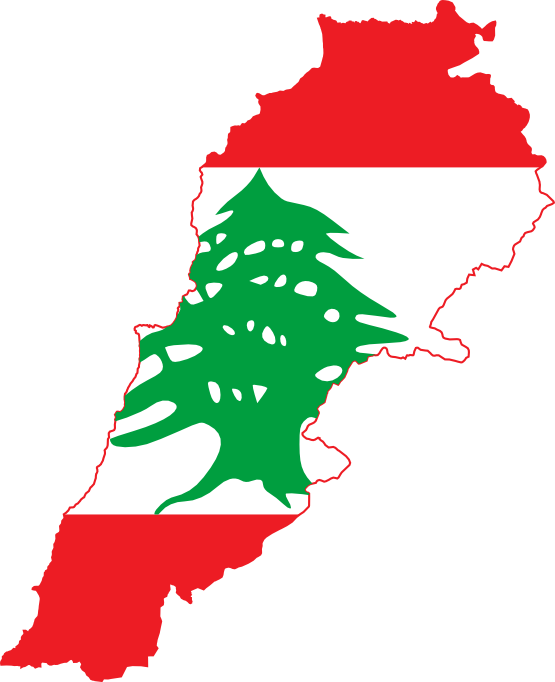
Continent: Asia
Official name : Lebanese Republic
Form of government : Parliamentary Republic
Head of State : No President since the end of Michel Aoun’s term in 2022
Area :10.452 km²
Currency : Lebanese pound (1 USD = 1512,9 LL)
Population (2023, IMF) :5,35 million inhabitants
Capital : Beirut
Main cities : Beirut; Tripoli; Sidon; Zahlé; Tyre; Baalbek; Byblos.
Official languages : Lebanese Arabic, French, English
Relations between Côte d’Ivoire and Lebanon are marked by the signing of several agreements.
During the official visit of the Lebanese President to Côte d’Ivoire on 14 and 15 March 2013, the Ivorian Head of State and his Lebanese counterpart signed six (06) agreements relating to :
- combating crime ;
- worker protection ;
- health ;
- agriculture ;
- tourism ;
- higher education and scientific research.
In addition, several draft agreements in the areas of bilateral cooperation are under negotiation. These are agreements aimed at strengthening cooperation in high-potential areas, namely : trade, industry, water and forests, animal and fishery resources, mining, oil and energy, and transport.
Furthermore, Côte d’Ivoire submitted draft agreements to Lebanon in the fields of information and communication, education and
technical education, culture, sport, and gender and children’s issues.
Moreover, an agreement establishing the Joint Ivorian-Lebanese Cooperation Commission and a memorandum of understanding were signed in 2009.
A. Main exports from Côte d’Ivoire to Lebanon: green coffee, cashew nuts, raw cotton, rubber, processed wood, and footwear.
B. Main imports from Lebanon to Côte d’Ivoire : various food preparations, petroleum products, plastics, miscellaneous products, consumer goods, ceramics, glass and stones, and road transport equipment.
Sources : DGE
- The value of bilateral trade was 29,2 billion FCFA in 2024, compared with 23.3 billion FCFA in 2023.
- Over the 2020–2024 period, the average value of Ivorian exports amounted to 3,3 billion FCFA per year, compared with 19,9 billion FCFA per year for imports.
- Over this period, Côte d’Ivoire’s trade balance was in deficit because of substantial imports of generating sets, static and rotary electrical converters, electrical transformers, and coils.