
BENIN
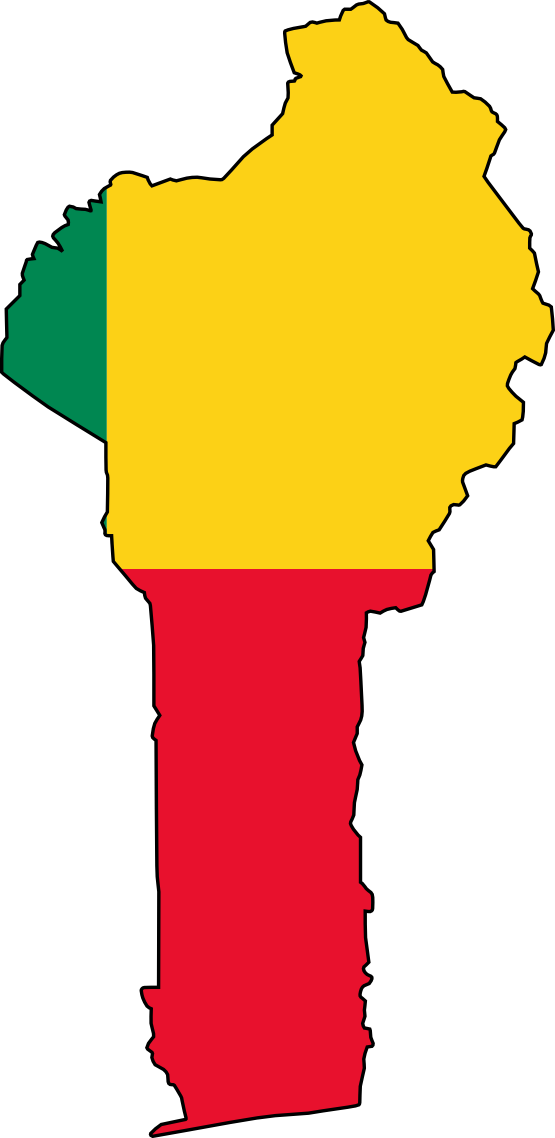
Continent: Africa
Official name: Republic of Benin
Form of government: Presidential
Head of State : Patrice TALON
Area : 112 622 km2
Currency : CFA francs (FCFA)
Population (2023) : 13,7 million inhabitants
Capital: Porto-Novo
Main cities: Cotonou, Djougou, Parakou, Abomey
Official language: French
Agreements and Conventions
Cooperation between Côte d’Ivoire and Benin is marked by several agreements. These include:
- Cooperation agreement signed on 18 May 2016 in the field of information and communication through their respective news agencies;
- Military and technical agreement, signed on 15 May 2014 in Cotonou;
- Air transport agreement, signed on 15 May 2014 in Cotonou;
- Cultural cooperation memorandum of understanding signed on 14 May 2014 in Cotonou;
- Twinning and cooperation agreement between the Municipality of Cotonou and the District of Abidjan, signed on 28 November 2012;
- Framework Agreement on Commercial and Industrial Cooperation, signed on 16 December 1999 in Abidjan;
- Agreement establishing a Côte d’Ivoire–Benin Joint Grand Commission for Cooperation, signed on 27 February 1992 in Abidjan (the latest session, the 3rd of its kind, was held in Cotonou on 15 and 16 May 2014).
In addition, further cooperation agreements were signed on 17 April 2014 by the Ministries of Foreign Affairs of the two (02) countries to strengthen bilateral cooperation in the following areas:
- the military and technical sector;
- national solidarity;
- family consolidation, the promotion of women and the protection of children;
- microfinance;
- youth and women’s employment;
- information and communication;
- implementation of the programme for applying the cultural convention for 2014-2016;
- air transport;
- education, technical education and vocational training;
- higher education and scientific research;
- establishment of a joint committee to monitor and evaluate the decisions and recommendations of the Joint Grand Commission for Cooperation.
In addition to signing these agreements, the two (02) heads of State reaffirmed their resolve to combine their efforts to better manage common threats such as terrorism, which hinder economic growth and stability in the sub-region.
A. The main products exported are: fuels, minerals, mineral oils, bituminous substances and mineral waxes.
B. The main products imported are : palm oils, premium motor spirit, heavy fuel oil, fuel and insecticides other than those packaged for retail sale.
Sources : DGE
- The value of bilateral trade reached 62,05 billion FCFA in 2024, compared with 47,90 billion FCFA in 2023.
- Over the 2020-2024 period, the average value of Ivorian exports is estimated at 47,033 billion FCFA per year, compared with 6,276 billion FCFA per year for imports.
- Over this period, Côte d’Ivoire recorded a trade surplus.