
MALI
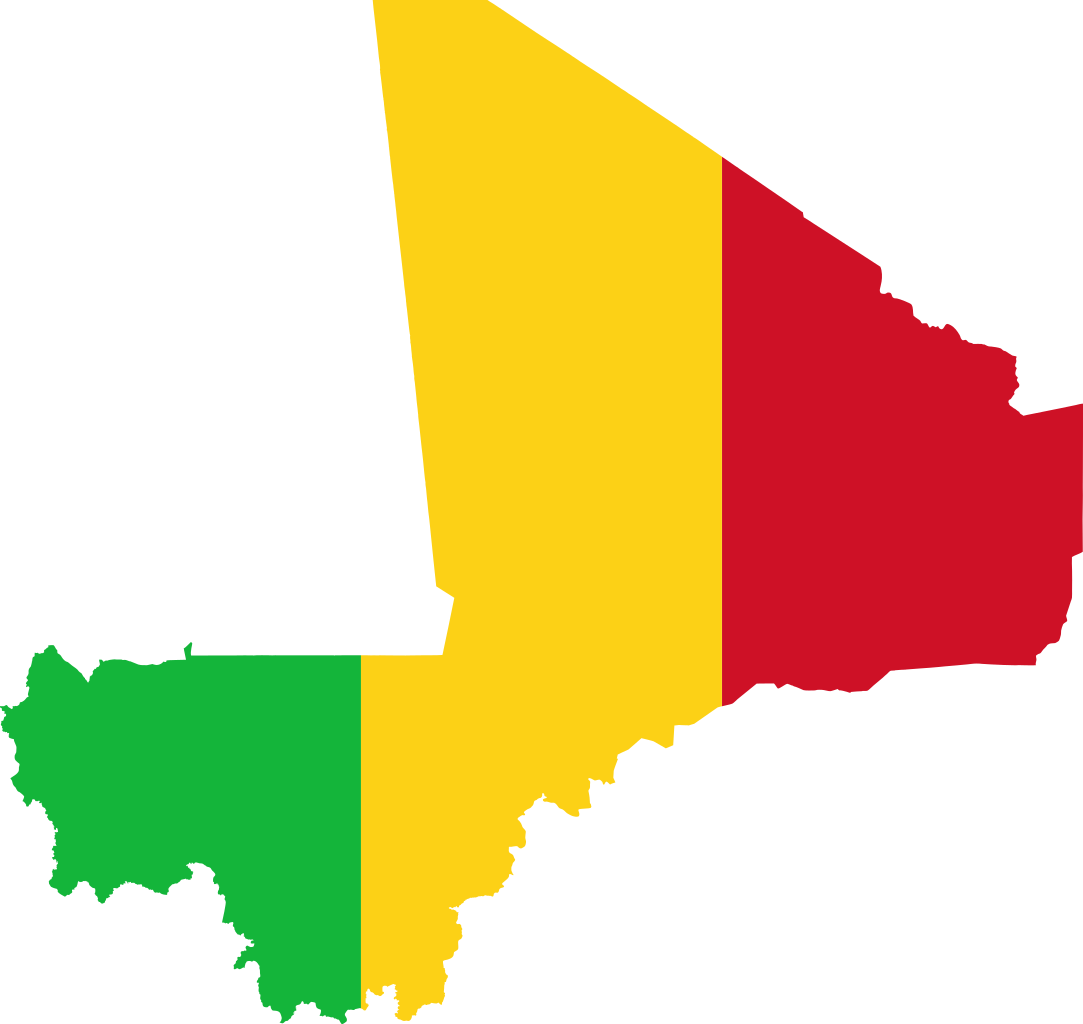
Continent: Africa
Official name: Republic of Mali
Form of government: presidential system
Head of State : Mr Assimi Goïta
Area : 1 241 231 km2
Currency : CFA francs (FCFA)
Population (2023) : 23,3 million inhabitants
Capital: Bamako
Main cities: Sikasso, Koutiala, Ségou, Kayes, Mopti, Gao
Official language: French
Agreements and conventions
Côte d’Ivoire and Mali cooperate in several areas.
I.1. Economic and financial cooperation
- A port area in Vridi was made available, in 1950, by President Félix Houphouët-Boigny for the transit of goods from Mali for import and export ;
- Establishment of the Malian Warehouses in Côte d'Ivoire (EMACI) by the Malian ministry responsible for transport to manage Mali's transit area ;
- An agreement on the offsetting of reciprocal debts and claims, signed on 23 July 1999;
- A trade agreement signed on 23 July 1999 ;
- An agreement on the interconnection of electricity networks, signed on 12 October 1993 ;
- A Treaty of Friendship, Cooperation and Mutual Assistance, signed on 30 August 1962.
I.2. Technical cooperation
- Five (05) judicial agreements were signed in May 2018 during President Ibrahim Boubacar Kéita's visit to Abidjan. These agreements provide for the facilitation of the reciprocal extradition of individuals subject to judicial proceedings and give any citizen deprived of liberty abroad the possibility of being transferred to their country of origin to serve their sentence;
- A tripartite agreement between the Republic of Mali, Burkina Faso and the Republic of Côte d’Ivoire establishing a cooperation framework to support the development of the border regions of the triangle, signed on 17 January 2012 in Sikasso ;
- An agreement on cooperation to combat child trafficking in West Africa, signed on 27 July 2005 ;
- An agreement on cooperation in road transport, signed on 9 January 2004 ;
- An agreement regulating transhumance, signed on 23 July 1999 ;
- A memorandum of understanding on cooperation in geology, mining and petroleum, signed on 23 July 1999 ;
- A zoosanitary agreement signed on 23 July 1999 ;
- A framework agreement on demarcating the border, signed on 23 July 1999 ;
- A cultural agreement signed on 23 July 1999 ;
- An agreement on cooperation in vocational training, signed on 23 July 1999 ;
- An agreement on cooperation in road transport, signed on 23 July 1999 ;
- A framework agreement on cooperation in animal production and health, signed on 23 July 1999 ;
- An agreement on cooperation in the fields of the environment and forestry, signed on 23 July 1999 ;
- An agreement establishing the Ivorian-Malian Joint Grand Commission, signed on 19 February 1977, in Abidjan ;
- A general convention on cooperation in the field of justice, signed on 11 November 1965.
To strengthen socioeconomic cooperation, the Ivorian and Malian authorities agreed to carry out the following projects with an integration objective :
- Construction of an inland port in the department of Ferkessédougou to facilitate trade and reduce transit and transport costs ;
- Development and paving of the Boundiali-Tengrela-Mali border road, as well as construction of the Man-Odienné-border road ;
- Construction of the Ouangolodougou-Niélé-Sikasso railway, notably for the transport of minerals.
Under the cross-border cooperation initiative launched by WAEMU and ECOWAS, Côte d’Ivoire and Mali benefit from pilot projects owing to the intensity of activity along their shared borders. Cross-border cooperation supports the development of economic, social and cultural activities.
A. The main products exported are : petroleum products, construction materials, instant coffee, oil, chocolate, milk, soap, cosmetics, plant products and chemical products.
B. The main products imported are : dairy products, essential oils and plant extracts, meat and edible offal, automatic machinery and petroleum products.
Sources : DGE-DPCEI
- The value of bilateral trade reached 984,877 billion FCFA in 2024 compared with 970,4 billion FCFA in 2023 ;
- Over the period 2020-2024, the average value of Ivorian exports is estimated at 807,74 billion FCFA per year compared with 6,55 billion FCFA per year for imports ;
- Over the period 2020-2024, Côte d’Ivoire had a trade surplus.