
Germany
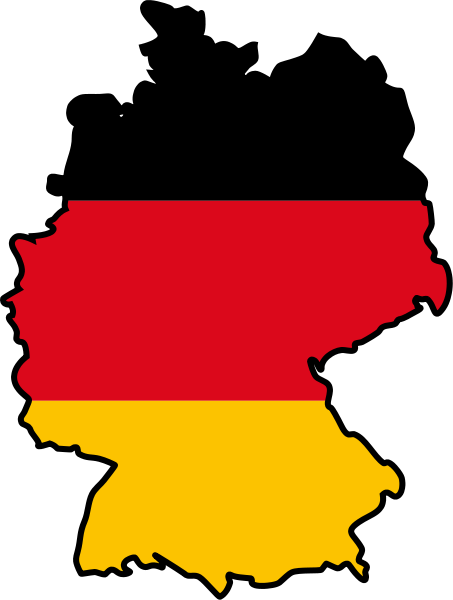
Continent: Europe
Official name: Federal Republic of Germany
Form of government: Parliamentary democracy
Head of the Federal State: Mr Frank-Walter Steinmeier
Area : 357.590 km2
Currency : euro
Population (2023): 84,5 million inhabitants
Capital: Berlin
Main cities: Berlin, Hamburg, Munich, Cologne
Official language: German
1.1. Economic and financial cooperation
Côte d’Ivoire maintains close cooperation relations with Germany, notably through its cooperation agency GIZ (Gesellschaft für Internationale Zusammenarbeit) and its bank KFW (Kreditanstalt für Wiederaufbau), which finance several projects, including:
- the Compact with Africa Programme, which promotes sustainable private investment in Africa. It is a G20 initiative undertaken in consultation with the African Development Bank (AfDB), the World Bank (WB) and the International Monetary Fund (IMF), aimed at stimulating private investment and employment in Africa. The partnership was signed by Côte d’Ivoire in 2017. In February 2019, the 1st meeting of the G20 Compact with Africa Country Team was held in the presence of the ambassadors of G20 member countries. It should also be noted that, beyond implementing the reform matrix, the efforts made under the G20 Compact helped promote private investment among investor groups from G20 countries. These actions contributed in particular to mobilising tangible gains from the Compact with Africa initiative.
- As part of the intergovernmental negotiations between Côte d’Ivoire and Germany, Germany undertook to allocate Côte d’Ivoire, for 2022, an amount of approximately 52.400 billion CFA francs (FCFA) (grants and loans) to ensure the effective implementation of bilateral development cooperation. These grants and loans were used for climate and energy; vocational training and employment; governance and sustainable management of natural resources and biodiversity; forest protection and restoration; sustainable economic development and good governance.
- A special allocation of 2.620 billion FCFA will support peacebuilding and crisis prevention through an initiative to strengthen resilience in northern Côte d’Ivoire.
- On 1 and 2 June 2021, during intergovernmental negotiations between Côte d’Ivoire and Germany, Germany announced support of 72,91 million euros, or 47,8 billion FCFA, to finance various projects in Côte d’Ivoire.
Germany’s direct financing to Côte d’Ivoire takes the form of loans and grants. Loans provided on Official Development Assistance (ODA) terms have been directed to the following sectors:
- Agriculture sector;
- Rural and urban water supply sector;
- Transport sector;
- Port infrastructure sector;
- Health sector;
- Energy sector;
- Environment sector and various other sectors.
- Conclusion of twelve (12) debt restructuring agreements between Germany and Côte d’Ivoire, representing a total of 457 billion FCFA in rescheduled debt. In addition, the last three (03) agreements are part of the implementation process for the Heavily Indebted Poor Countries (PPTE) Initiative ;
- on 21 September 2010 and 09 September 2012, two (02) debt conversion agreements were signed with Germany. These agreements relate respectively to the health sector, through the creation of a fund at the Global Fund to Fight AIDS (SIDA), Tuberculosis and Malaria, and to the environment sector, through the creation of a fund at the Foundation for Parks and Reserves of Côte d’Ivoire.
1.2. Technical cooperation
- Cooperation in renewable energy and energy efficiency
- In November 2018, a partnership agreement was signed with Germany to promote and finance the renewable energy sector in Côte d’Ivoire.
Known as the Declaration of Intent, it forms part of the G20 Compact with Africa Programme. This is the first agreement between Côte d’Ivoire and Germany; it provides for financing of 100 million euros, approximately 65,5 billion FCFA, through the German Federal Ministry for Economic Cooperation and Development (BMZ). This financing consists of a grant of 15 million euros, or 9,8 billion FCFA, and a concessional loan of 85 million euros, or 55, 7 billion FCFA.
In addition, several other agreements were signed during a visit by Bavarian business representatives to Côte d’Ivoire in November 2018. These include:
- An agreement to install 6 000 solar-powered water pumps with the Ministry of Hydraulics;
- an agreement for the delivery of 5 000 water-filtering machines;
- an agreement with the local company “SHELEC” to maintain CIE electrical substations using H3 gas;
- a Memorandum of Understanding with SIEMENS to develop new activities;
- a contract for the sale of 100 MW of solar panels and the opening of a technical school.
However, several projects in the energy sector are financed by German cooperation:
- Côte d’Ivoire–Ghana interconnection (WAPP);
- 37,5 Mwc solar power plant;
- Doubling of the Taabo–Yamoussoukro–Kossou–Bouaké line.
- Cooperation in rural development and biodiversity conservation
Several projects are financed by GIZ and KFW:
- Support for implementation of the national REDD+ strategy (Reducing Emissions from Deforestation and Forest Degradation), specifically the elimination of deforestation from raw-material supply chains;
- financing of a jurisdictional project with the San-Pedro region: the CAZ Project (Zero-Deforestation Supply Chains).
- Cooperation in the health sector
- Donation of 251 000 mosquito nets to Côte d’Ivoire by the German Chancellor as part of the fight against malaria ;
- financing, through GIZ and KfW, of health programmes on family planning and HIV/AIDS (VIH/SIDA) prevention, as well as the health system strengthening programme in Loh Djiboua and Haut Sassandra.
- Cooperation in the mining sector
Cooperation enabled the implementation of the Regional Governance of the Extractive Sector in West Africa Project (GRSE), which comprises four (04) components:
- capacity-building for regulatory authorities responsible for managing the sector and implementing tax and social requirements;
- capacity-building for civil society stakeholders;
- strengthening cooperation between the administration, the private sector and the population on local development;
- cooperation (exchange of information and experience) among the four (04) countries of the Mano River Union (CI, Guinea, Liberia, Sierra Leone).
- Cooperation in the security sector
- Capacity-building for the national police, specifically the forensic police, by the German cooperation agency GIZ.
A. The main products exported are: rubber, processed wood, processed cocoa, green coffee, cocoa beans, raw cotton, petroleum products, cashew nuts, canned tuna, cola nuts and other miscellaneous products.
B. The main products imported are : food products, chemicals, dairy products, fresh fruit and vegetables, fish, motor vehicles, household electrical appliances, as well as meat and edible offal.
Source : DGE
- La valeur des échanges bilatéraux a atteint 750 398 millions de FCFA en 2024 contre 745 200 millions de FCFA en 2023 ;
- Sur la période 2020-2024, la valeur moyenne des exportations ivoiriennes est estimée à 380 187,9 millions de FCFA/an contre 245 131,7 millions de FCFA/an pour les importations ;
- Sur la période 2020-2024, la balance commerciale est excédentaire pour la Côte d’Ivoire.