
BURKINA FASO
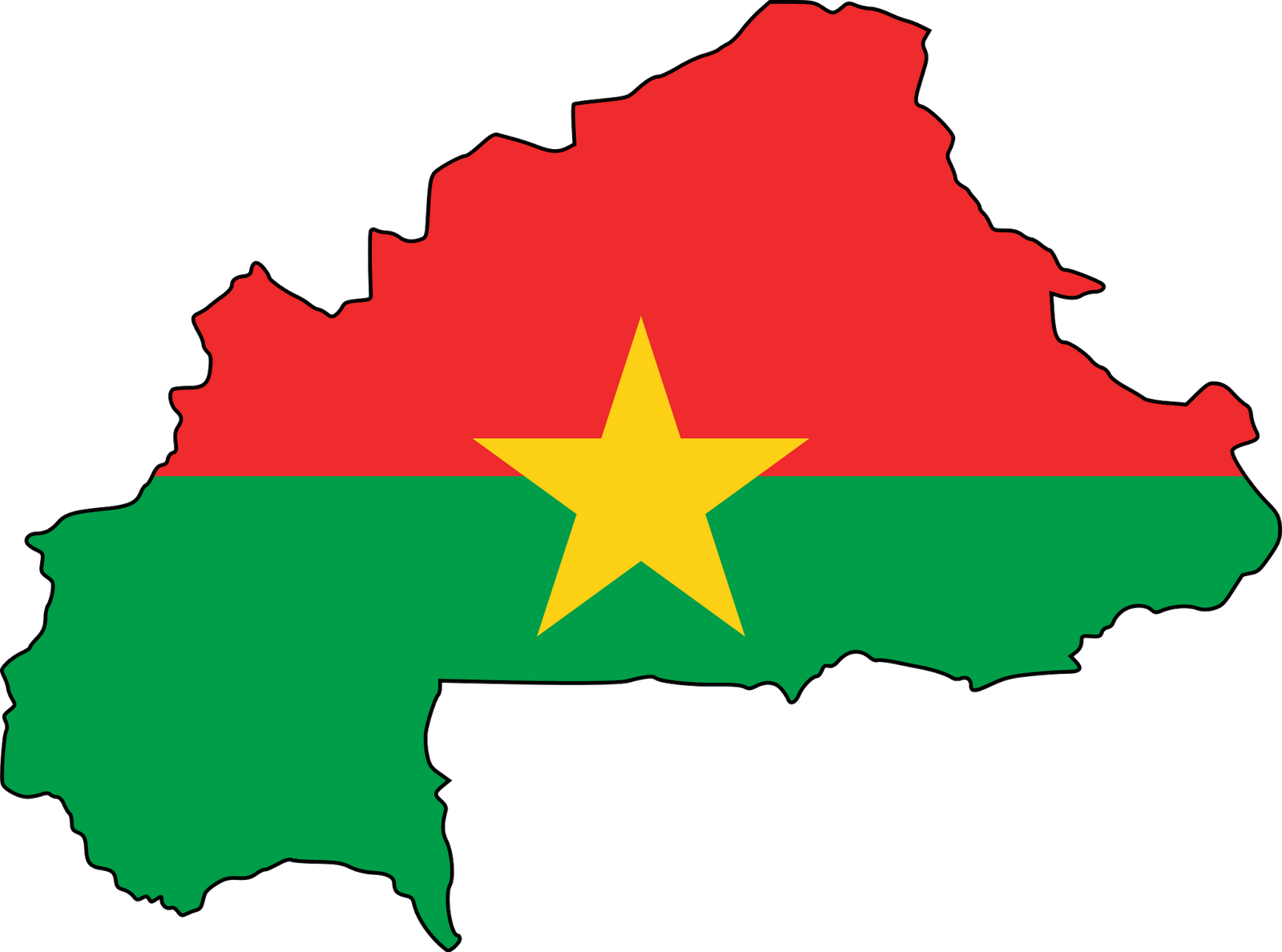
Continent: Africa
Official name: Burkina Faso
Type of government: Transitional government
Transitional President: Captain Ibrahim TRAORE
Area : 274 500 km2
Currency : CFA francs (FCFA)
Population (2023): 23,25 million inhabitants
Capital: Ouagadougou
Main cities: Ouagadougou, Bobo-Dioulasso, Koudougou
Official language : French
Agreements and Conventions
Relations between Côte d'Ivoire and Burkina Faso are marked by several agreements.
Three (03) cooperation agreements were signed in Ouagadougou at the conclusion of the 8th Summit Conference of the Heads of State of the Treaty of Friendship and Cooperation (TAC), held on 30 July 2019 :
- Framework Agreement on Cross-Border Cooperation ;
- Cooperation Agreement in the fields of mining and geology ;
- Cooperation Agreement on the protection of children in situations of mobility.
In addition, the two (02) countries undertook to promote subregional integration, notably by improving the business and investment climate through the establishment of reciprocal privileges, facilitating air and land trade, and facilitating the right of establishment, access to work and residence for nationals of both countries.
Furthermore, four (04) agreements and memoranda of understanding were signed at TAC 7 in Yamoussoukro on 27 July 2018 :
- Cooperation Agreement in the fields of the Digital Economy and Postal Services ;
- Memorandum of Understanding on cooperation in co-production, training, and film and audiovisual exchanges ;
- Memorandum of Understanding setting out the practical arrangements for the operation and implementation of the Ivorian-Burkinabe Fund for the Promotion of Women (FACIBF) ;
- Memorandum of Understanding setting out the practical arrangements for the operation and implementation of the Ivorian-Burkinabe Friendship and Cooperation Fund for Youth Integration (FACIBIJ).
Several other cooperation agreements exist in various fields.
These include :
- Framework Negotiation Agreement for the rehabilitation, construction and operation of the Abidjan-Kaya-Tambao railway and the construction of the mineral terminal at the Port of Abidjan, signed on 31 July 2014 in Ouagadougou ;
- Convention on mutual legal assistance in criminal matters, signed on 30 July 2014 in Ouagadougou ;
- Memorandum of Understanding on the Joint Parity Commission for Demarcating the Border between the two countries, signed on 30 July 2014 in Ouagadougou.
- Protocol establishing the Joint Committee for Monitoring the Fluidity of Traffic and the Free Movement of Persons and Goods, signed on 30 July 2013 in Yamoussoukro ;
- Cooperation Agreement on combating cross-border child trafficking, signed on 30 July 2013 in Yamoussoukro ;
- Cultural Cooperation Agreement signed on 28 December 2009 in Ouagadougou ;
- Treaty of Friendship and Cooperation (TAC), signed on 29 July 2008 in Ouagadougou ;
- Political Agreement signed on 04 March 2007 in Ouagadougou ;
- Cooperation Agreement on combating child trafficking in West Africa, signed on 27 July 2005.
Furthermore, the two (02) parties agreed to hold periodic consultations on important foreign policy matters in order to reach, as far as possible, a harmonised position. In countries where either State has no diplomatic representation, the other State, if it has a diplomatic mission, represents its interests.
In the areas of security, defence and justice, the two countries decided to promote cooperation to advance subregional integration in response to organised crime and transnational criminal activity.
A. The main products exported are: cereals, starchy foods, peaches, fresh pineapple, kola nuts, bananas, oilseeds, rubber, sugar, tobacco, processed wood, processed cocoa and coffee, pineapple juice, confectionery, palm oils, other preserved and prepared foods, fertiliser, essential oils, chemicals, plastics, petroleum products, cement, paper and cardboard.
B. The main products imported are : dairy products, fruit and vegetables, cotton, construction materials and road transport equipment.
Sources: DGE
- The value of bilateral trade reached 469,139 billion FCFA in 2024, compared with 489,4 billion FCFA in 2023 ;
- Over the 2020-2024 period, the average value of Ivorian exports is estimated at 418,6 billion FCFA per year, compared with 9,4 billion FCFA per year for imports ;
- Over the 2020-2024 period, Côte d'Ivoire recorded a trade surplus.