
JAPAN
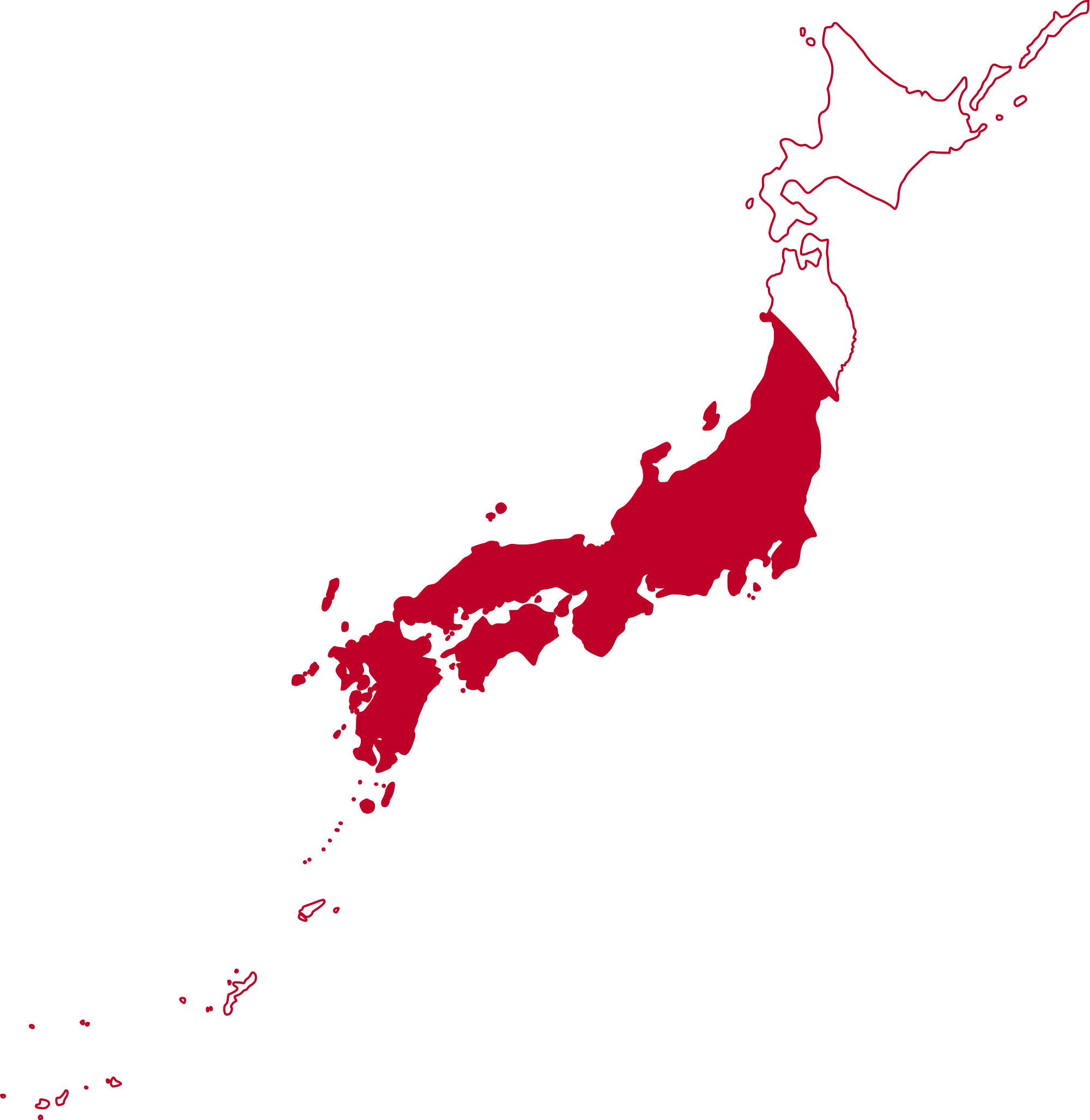
Continent: Asia
Official name: Japan
Form of government: Parliamentary monarchy
Head of the Federal State: H.M. Emperor NARUHITO
Area :377 000 km²
Currency : Yen
Population (2023) :124,5 million inhabitants
Capital: Tokyo
Main cities: Yokohama, Osaka, Nagoya, Sapporo, Kobe, Fukuoka, Kyoto
Official language : Japanese
As part of its economic cooperation projects, Japan has made non-repayable funds available to Côte d’Ivoire under Official Development Assistance (ODA) to carry out economic and social development activities.
Japan's financing since 2010 amounts to 333,387 billion CFA francs (FCFA) billion FCFA. This contribution comes from the Government of Japan (22.62%, or 75,421 billion FCFA) and from the Japan International Cooperation Agency (JICA) (77.38%), or 257,966 billion FCFA, comprising grants amounting to 109,376 billion FCFA and loans for structural projects amounting to 148,590 billion FCFA.
The main sectors receiving funding are :
- economic and port infrastructure ;
- environment and sustainable development
- agriculture
- defence and security
- water and forestry
- peace and social cohesion
- administrative and territorial governance
- technical and vocational education
- animal and fisheries resources
The main projects currently under way concern the environment and sustainable development, agriculture, administrative and territorial governance, and peace and social cohesion. They are :
- the Côte d'Ivoire forest conservation programme aimed at ensuring the integrity, protection and enhancement of the parks and reserves of Côte d’Ivoire. Japan's funding is 7,5 billion FCFA ;
- the project to promote locally grown rice in the Republic of Côte d’Ivoire (PRORIL) : it aims to increase the volume of local rice sales in the targeted areas (Yamoussoukro, Bouaké, Abidjan). JICA's contribution is 3,7 billion FCFA ;
- the project to strengthen municipalities for social cohesion in Greater Abidjan : it aims to promote human development and consolidate social peace. JICA's contribution is 3,03 billion FCFA ;
- the human resources development project to strengthen local government in areas affected by the crisis : it involves strengthening the system for delivering basic services in the five (05) Districts of the conflict-affected central and northern areas. JICA's contribution is 2,976 billion ;
- the project to revive inland fish production in Côte d’Ivoire : it consists of providing fish farmers with the necessary technical assistance through technical training, technology transfers and the organisation of their professional bodies, facilitating their transition into cooperative companies. JICA's contribution is 2,35 billion FCFA, and the grant agreement was signed on 22 December 2015 ;
- the project to develop the Ivorian-Japanese Friendship Interchange, signed on 10 July 2015 at a cost of 24,3 billion FCFA ;
- the project to build the landing stage and central market in Sassandra, the funding for which was signed on 09 November 2016 for an amount of 15,5 billion FCFA ;
- the project to build the grain terminal at the Port of Abidjan, for an amount of 10,869 billion Japanese Yen, or approximately 60 billion francs C The loan agreement was signed on Thursday 30 March 2017 ;
- the project to build three (03) interchanges in Cocody (Ecole de Police, Riviéra 3 and Palmeraie), for an amount of 80,7 billion FCFA, signed in February 2019.
- the project to support the upgrading of the equipment of the Regional Academy of Marine Sciences and Techniques in Abidjan, signed on 21 December 2015 at a cost of 3,25 billion FCFA ;
- the project to improve television programmes and equipment for programme production at Radiodiffusion Télévision Ivoirienne, signed on 31 December 2015 for a total cost of 258 million FCFA
Furthermore, under the Ivorian-Japanese Friendship Interchange development project, Japan granted 25,135 billion FCFA to Côte d’Ivoire in Abidjan on 08 January 2019 to finance phase 2 of the project. Work began on 25 November 2016.
On 29 August 2019 in Yokohama, Côte d’Ivoire and Japan signed an agreement to establish a Toyota vehicle assembly plant in Côte d’Ivoire. In addition, the two countries signed a reciprocal investment protection agreement on 13 January 2020.
It should be noted that a trade agreement between Côte d’Ivoire and Japan was signed on 25 May 1970.
An Investment Protection and Promotion Agreement (APIE) between the two countries was signed in January 2020.
Furthermore, on 25 May 2022 in Abidjan, the Japan International Cooperation Agency (JICA) signed loan agreements totalling 37 028 million JPY (Japanese yen) with the Government of Côte d'Ivoire for the following two projects :
- Emergency support loan in response to the COVID-19 crisis (loan amount: 15 000 million JPY ;
- Taabo-Kossou-Bouake power grid strengthening project (loan amount: 22 028 million JPY)
Furthermore, on Tuesday 06 September 2022, as part of support for agriculture in the north and west of Côte d’Ivoire, Japan and Côte d’Ivoire signed an agreement to provide a grant of 500 million yen, or approximately 2,4 billion CFA francs, for the supply of tractors and fertiliser to promote mechanisation and improve agricultural productivity.
A. The main products exported are: cocoa and its preparations, wood, charcoal and wood products, copper.
B. The main products imported are: cars, machinery, mechanical appliances and equipment, clinker, products from the manufacture of pig iron, iron or steel, new rubber tyres, frozen fish
Sources : DGE
- The value of bilateral trade declined slightly, from 185,86 billion CFA francs in 2023 to 182,520 billion in 2024.
- Over the 2020-2024 period, the average value of Ivorian exports is estimated at 6,4 billion FCFA per year, compared with 154,6 billion FCFA per year for imports.
- Over the 2020-2024 period, Côte d’Ivoire had a trade deficit owing to high vehicle imports.