Niamey | Presiding over the second ordinary session of the UMOA Council of Ministers, Minister Adama Coulibaly welcomes the adoption of several texts beneficial to WAEMU countries
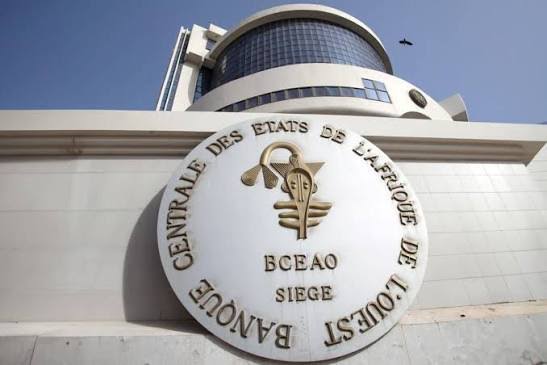
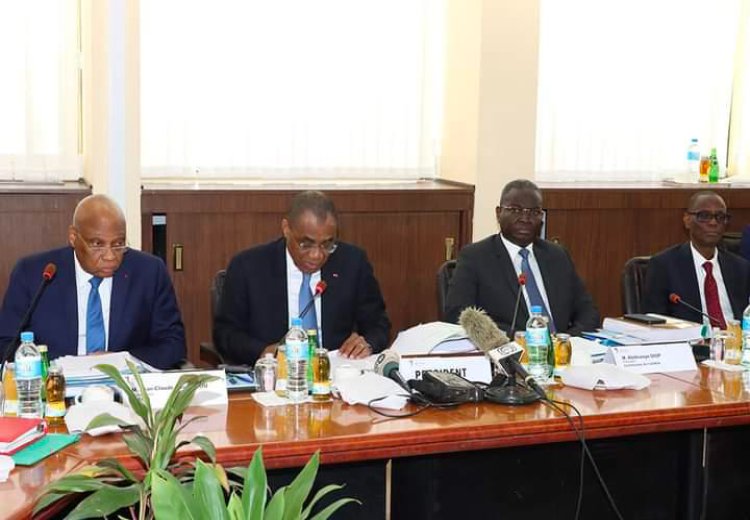
The premises of the BCEAO main agency in Niamey (Niger) hosted the proceedings of the second ordinary session of the UMOA Council of Ministers, for 2023, on Friday 16 June. These proceedings, marking the resumption of the rotating meetings of the Union’s bodies in UMOA countries, were chaired by Adama Coulibaly, Minister of Economy and Finance of Côte d'Ivoire, in his capacity as President of the Union’s Council of Ministers.
Items on the agenda included the examination of two draft Regulations relating to the WAEMU Community Mining Code and the digitalisation of customs procedures and formalities and foreign trade within WAEMU; the adoption of three Directives on consumer protection in the West African Economic and Monetary Union; as well as the framework for coordinating and sharing radio frequencies and the harmonisation of the regulatory framework for the approval of terminal and radio equipment in the WAEMU area.
At the end of the session, the acting President of the Council of Ministers, Minister Adama Coulibaly, said in his closing address that, with regard to all the matters on the agenda, important decisions and measures intended to provide solutions that could meet the expectations of the Union’s member States had been adopted. In this regard, Minister Adama Coulibaly welcomed the adoption of the draft Regulations relating to the WAEMU Community Mining Code and the digitalisation of customs procedures and formalities and foreign trade, which undoubtedly help strengthen subregional integration and promote trade within this area. *“Furthermore, the adoption of the Directive establishing a framework for coordinating and sharing radio frequencies for terrestrial services from 87.5 MHz to 30 GHz in border and maritime areas, as well as the Directive harmonising the regulatory framework for the approval of terminal and radio equipment in the WAEMU area, represent significant advances for our subregion. I would also like to highlight the adoption of the Directive on consumer protection in the West African Economic and Monetary Union. This text is a relevant Community instrument that establishes the rules applicable to economic operators in conducting their activities and those relating to prices. It will ensure transparency and fair competition in commercial transactions. Furthermore, I welcome the approval of the annual accounts of AMF-UMOA closed as at 31 December 2022”*, noted the President of the UMOA Council of Ministers.
Finally, he continued, the adoption of the Banking Regulation Act will undoubtedly help strengthen the soundness and resilience of the regional banking sector. Minister Adama Coulibaly explained that this legal instrument will take account of changes in the banking environment, the impact of the development of new technologies, as well as the challenges of financial inclusion and financing economic activities in the Union.
The Minister of Economy and Finance of Côte d'Ivoire also wished to recall that this session was being held in a relatively favourable context for the Union, despite security and climate challenges and the persistence of numerous international uncertainties. He explained that economic activity remained dynamic in UMOA during the first quarter of 2023, with GDP increasing by 5.4% year on year, following growth of 5.3% in the previous quarter. This increase in activity was driven by changes in value added across all sectors. *“Year-on-year inflation stood at 5.8% in the first quarter of 2023, compared with 7.8% one quarter earlier. This slowdown in the general price level is attributable to slower increases in food prices, linked in particular to the 17.6% rebound in cereal production for the 2022/2023 season, measures taken by member States to combat the high cost of living, and the Central Bank’s monetary action. Public finance management in WAEMU during the first three months of 2023 shows a reduction in the overall budget deficit on a commitment basis, including grants. This positive trend is due to a larger increase in revenue and grants than in total expenditure and net lending. This public deficit was covered by mobilising resources on the regional financial market and from technical and financial partners”* , he added.
Furthermore, according to Minister Adama Coulibaly, WAEMU’s external trade should lead to an improvement in the balance of payments in 2023, following the sharp deterioration recorded in 2022. This change would be mainly due to the start of oil and gas production in Niger and Senegal, as well as improved terms of trade. The current account deficit should therefore improve in 2023. He also noted that the overall balance of payments would show a deficit in 2023, to a lesser extent than in 2022. *“Under these circumstances, maintaining harmonious relations between the Union’s member States and development partners is an asset for creating the conditions for a sustained increase in financial resource mobilisation and stronger financial stability”* , recommended the President of the UMOA Council of Ministers, before noting that the various economic and financial integration programmes continued to be implemented in all sectors of activity.
It should be noted that, at the end of their proceedings, Council members were granted an audience with President Mohamed Bazoum, the serving Chair of the WAEMU Conference of Heads of State, who shared his roadmap with them.
In addition to the members of the UMOA Council of Ministers, Abdoulaye Diop and Sègnon Yves Marie Adissin also took part in the meeting, as Chairpersons of the Commission and of the
Court of Auditors of WAEMU, respectively, as well as Commissioners Mahamadou Gado, Lassine Bouaré, Paul Koffi Koffi and Filiga Michel.
SERCOM MEF