Côte d’Ivoire: the rise of the extractive sector, with CFA francs (FCFA) 10 000 billion invested over a decade
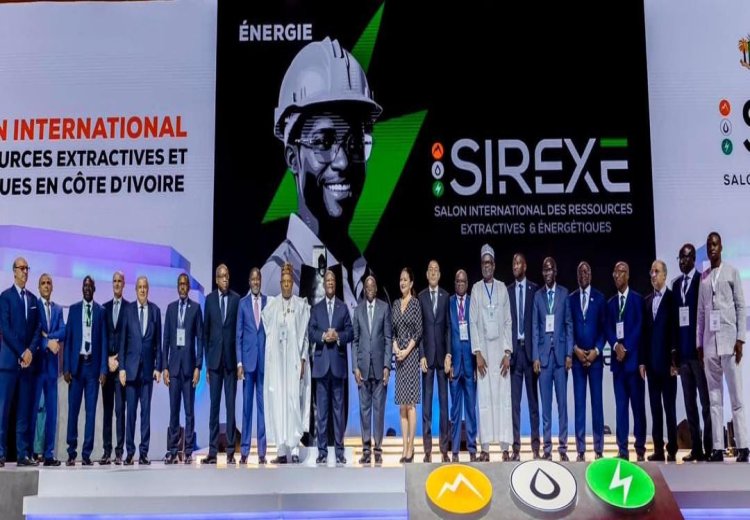
At the heart of the first International Exhibition of Extractive and Energy Resources (SIREXE), held in Abidjan from 27 November to 2 December 2024, Côte d’Ivoire highlighted the impressive results of its mining sector, the fruit of a decade of reforms and strategic investment.
In his opening address, Vice-President Tiémoko Meyliet Koné underscored the Government’s efforts to position extractive resources as a driver of economic development. Between 2014 and 2024, FCFA 10 000 billion (approximately EUR 15.24 billion) was invested in the mining and oil sector through cooperation between public- and private-sector stakeholders.
These efforts have produced spectacular results. In ten years, gold production quadrupled, rising from 20 tonnes to more than 50 tonnes in 2023, consolidating the country’s position among Africa’s leading gold producers. Meanwhile, manganese production was multiplied by 30, and Côte d’Ivoire became a major player in the extraction of new minerals such as nickel.
The outlook is even more promising. Recent gold deposits discovered in Tanda and Kani, each estimated at approximately 150 tonnes, are expected to increase national gold production by 22 tonnes per year. As for hydrocarbons, new discoveries are expected to increase oil production tenfold by 2030, further strengthening the role of the extractive sector in the national economy.
The Ivorian Government has supported this momentum with ambitious reforms. Accession to the Extractive Industries Transparency Initiative (ITIE) has helped strengthen governance and ensure an equitable distribution of revenue. The adoption of the local content law, which involves communities in managing the benefits, demonstrates a commitment to inclusive development.
The impact of these policies is reflected in social and economic improvements. Between 2011 and 2024, the rural electrification rate rose from 33% to 95%, showing how revenue from natural resources directly benefits the population.
Furthermore, the development of the mining sector has contributed to the creation of large numbers of jobs and economic diversification. The country is now exploring new strategic minerals, such as cobalt and lithium, which are crucial to global technology industries.
Côte d’Ivoire shows how well-managed extractive resources can become drivers of economic transformation. With substantial investment, stronger governance and unprecedented growth prospects, the country is positioning itself as a model for Africa, combining sustainable extraction with improved living conditions.
Source : SIKA Finance, MEPD Web Portal Editorial Team