Ivorian policy worth nearly 68 billion dollars adopted to boost mining and energy
On 3 December 2025, the Ivorian government approved the Integrated Mineral Resources and Energy Policy (PIRME), a large-scale strategic instrument covering a fifteen-year period with an allocation of 38,000 billion CFA francs (FCFA), or nearly 68 billion dollars. Through this initiative, the executive intends to profoundly reshape the mining and energy sectors, which are called upon to become structuring levers of economic transformation and national growth momentum.
At the heart of this strategy are increased production of minerals and hydrocarbons, local valorisation of extractive resources, and the upskilling of national players within value chains. PIRME also aims to accelerate the transformation of the energy landscape through a significant increase in the share of renewable energy, in order to guarantee broader access to affordable and reliable electricity.
“PIRME is a formal and clear framework presenting the coherent articulation of sectoral orientations to make mineral and energy resources the lever of a new phase of continuous and sustainable growth,” the government stated at the close of the Council of Ministers in Abidjan. This integrated policy should transform the extractive and energy resources sector into a major pillar of the national economy and gradually raise Côte d’Ivoire to the rank of “upper-middle-income countries by 2030”.
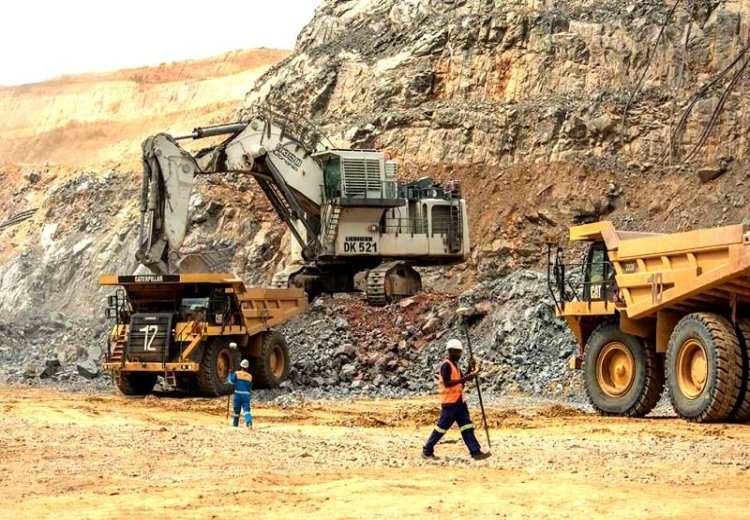
Rich in an exceptional subsoil (gold, diamond, manganese, nickel, bauxite, iron, coltan, phosphate, lithium, copper, cobalt, chromium), the Ivorian mining sector accounts for 13% of exports and 5% of GDP, momentum driven by the rise in exploration permits.
In the oil sector, the major discoveries of the Baleine and Calao fields open a new cycle. They could raise production to 200,000 barrels per day by 2028, significantly repositioning Côte d’Ivoire on the regional energy map.
Finally, on the electricity front, the commissioning of four solar power plants in 2027 marks a key step towards the goal of 45% renewable energy in 2030, compared with 8% today.
Source : Mag XINHUANET, MEPD web portal editorial team