Ivorian economy on course for 6.7% growth in 2026 within a consolidated macroeconomic framework
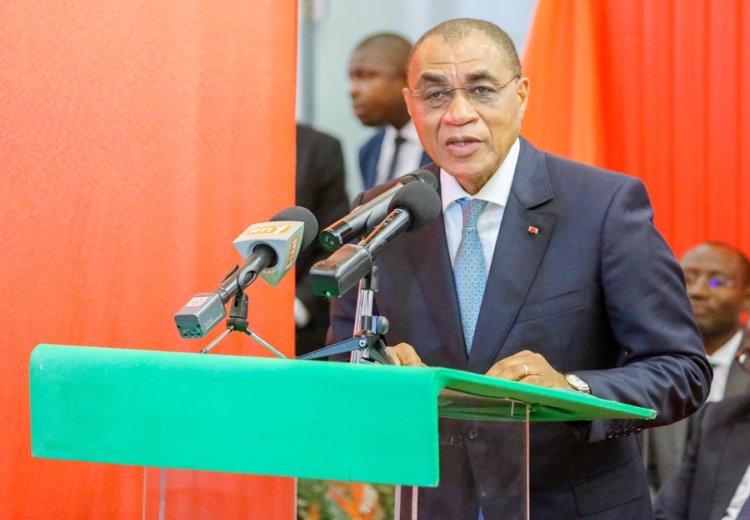
In an international context marked by persistent economic and financial uncertainty, Côte d’Ivoire shows resolutely favourable macroeconomic prospects. The country projects economic growth of 6.7% in 2026, supported by inflation contained at 1.5% and a gradual improvement in the tax burden, expected at 15.7% of GDP, compared with 15% in 2025. Presented by the Minister of Economy, Finance and Budget, Mr Adama Coulibaly, at the official 2026 New Year greetings ceremony, these orientations reflect the authorities’ determination to consolidate macroeconomic balances while pursuing a sustainable, inclusive and resilient development path.
In this spirit, government action for the 2026 financial year will revolve around eight major strategic priorities. These notably concern the completion of the economic and financial programme concluded with the International Monetary Fund (IMF), the preservation of a stable macroeconomic framework, the strengthening of domestic resource mobilisation and the continuation of structural public finance reforms. To support these ambitions, the State plans to raise 4,911.9 billion CFA francs (FCFA) on regional and international financial markets, in line with its proactive public debt management strategy and with a view to preserving debt sustainability.
The performance recorded in 2025 reinforces the credibility of this economic trajectory. Côte d’Ivoire thus benefited from approximately FCFA 900 billion in IMF financing, in recognition of the significant progress made in implementing the 2023-2026 programme. At the same time, the country raised FCFA 3,582.7 billion on the regional financial market, exceeding the initial target by 14%. To this are added innovative fundraising operations on international markets, notably a eurobond denominated in FCFA (FCFA 219.8 billion) and a Samurai bond (FCFA 191.2 billion). The success of these financial instruments attests to the strengthened attractiveness of the Ivorian sovereign signature and positions the country among the most dynamic African players in financial engineering.
On the budget front, the consolidation path undertaken is gradually being confirmed. The public deficit, estimated at 6.7% of GDP in 2022, was reduced to 4 % in 2024 and is expected to reach 3% in 2025, in line with the Community standard. In addition, the clearance of FCFA 1,556.8 billion of supplier arrears by end-2025, benefiting more than 6,700 providers, helps support corporate cash flow and strengthen private sector confidence. This increased fiscal discipline has also improved the country’s risk profile, reflected in the upgrade of the sovereign rating by the agency Fitch Ratings.
2026 thus marks the opening of a new strategic cycle with the launch of the 2026-2030 National Development Plan (NDP). In a still uncertain international environment, the authorities intend to rely on rigorous fiscal governance, diversification of financing sources and the continued modernisation of the financial administration in order to preserve growth momentum and accelerate the structural transformation of the Ivorian economy.
Source : Agence Ecofin — Editorial adaptation by the MEPD web portal