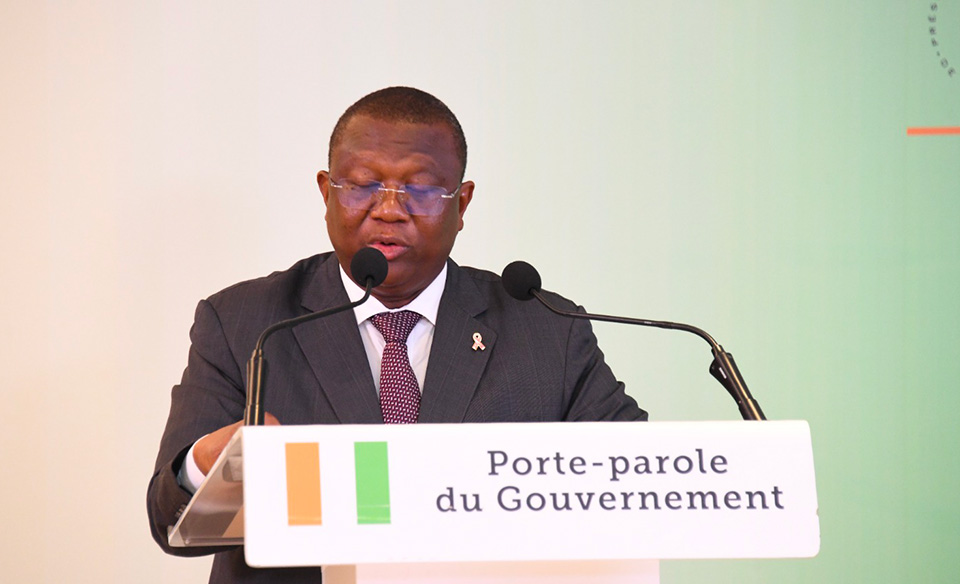
Ivorian customs reinforce their role as a budgetary pillar, with over FCFA 2,700 billion mobilised in 2024
In 2024, Ivorian Customs once again established itself as a central player in national fiscal policy. With 2,729.7 billion CFA francs (FCFA) in gross revenue, compared with FCFA 2,490.5 billion in 2023, it posted a notable increase of 9.6%, demonstrating its resilience in an international environment still affected by logistical and trade tensions.
This performance is not an isolated phenomenon. Over the 2015-2024 period, customs revenue grew on average by 6.7% per year, reflecting the cumulative impact of reforms: digitalisation of procedures, clean-up of corridors, stronger controls and broadening of the tax base. Port, border and airport administrations now benefit from more effective tools, which is directly reflected in the revenue curve.
Most customs revenue rests on four major levies: VAT (30.3%), customs duties (23.3%), the single specific tax (18.6%) and the single export duties (17.9%). These four items total 90.1% of revenue, confirming the structuring role of foreign trade in financing the State, while recalling the potential vulnerability to global shocks.
Relative to the budget framework, customs revenue on a TOFE basis (government financial operations table) amounts to FCFA 2,651.7 billion, representing 35.2% of total tax revenue (FCFA 7,533.8 billion). This share, slightly below the 37.1% of 2023, is explained by the growing strength of non-customs tax revenue.
As a proportion of GDP, the contribution of customs remains stable at 5%, confirming their structural importance in the Ivorian economy and their essential role in the sustainability of public finances.
These results reflect the capacity of Ivorian customs to secure and increase public resources, a crucial issue in a context marked by high investment needs and the need to reduce dependence on debt. They also reflect the relevance of the reforms undertaken to modernise the administration and strengthen the resilience of public finances.
Source : Sika finance, MEPD web portal editorial team