Historic performance for the Autonomous Port of Abidjan, with 46.6 million tonnes handled in 2025
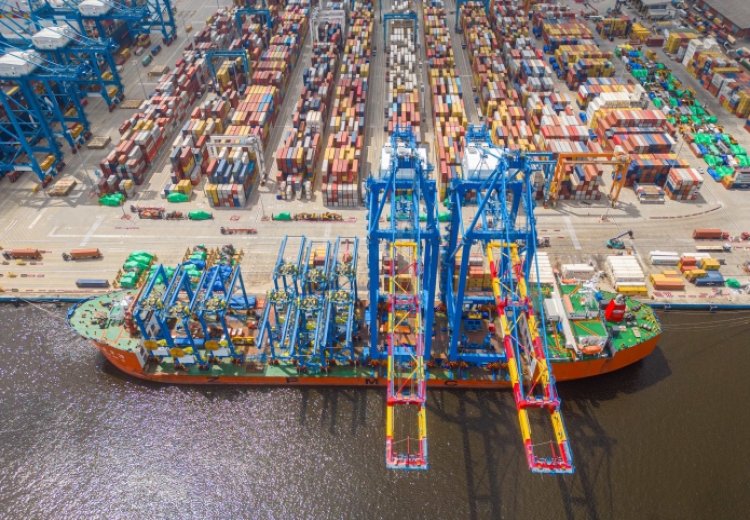
In 2025, the Autonomous Port of Abidjan recorded remarkable growth in its activities, confirming its strategic position as a major logistics hub in West Africa. Overall traffic reached 46.6 million tonnes, compared with 40.1 million tonnes in 2024, a sustained growth of +16.1%. This performance reflects both the increased competitiveness of the port platform and the resilience of the Ivorian economy in a constantly changing regional environment.
National traffic remains the main driver of this expansion. It amounts to 34.2 million tonnes in 2025, compared with 28.55 million tonnes the previous year, a significant increase of +19.8%. The port thus consolidates its role as the country’s main gateway for trade, serving the industrial, energy and commercial sectors. This development also testifies to the growing strength of logistics capacity and smoother port operations.
At the same time, container traffic continues its upward trajectory. With 1,697,131 twenty-foot equivalent units (TEU; EVP in French) handled in 2025, compared with 1,646,304 TEU in 2024, the increase of +3.1% reinforces the effects of the structuring investments made in recent years. For the second consecutive year, the one-million-TEU threshold has been comfortably exceeded, paving the way for the strategic objective of reaching 2 million TEU by 2027.
In addition, transit traffic to the hinterland countries is recovering vigorously, standing at 3.92 million tonnes, up +34.1%. In this respect, the Abidjan corridor is strengthening its attractiveness among operators from Burkina Faso, whose traffic reaches 2,400,111 tonnes in 2025 against 2,058,803 tonnes in 2024, and from Mali, which records 1.47 million tonnes in 2025 against 835,216 tonnes the previous year
Nevertheless, in a context of increased competition among ports in the sub-region, transshipment traffic records a slight decline of -1.9%, reflecting certain operational and logistical constraints.
Ultimately, with more than 1,000 billion CFA francs (FCFA) invested since 2012, the Autonomous Port of Abidjan now has modernised and competitive infrastructure. Accordingly, the new investment cycle currently under study should make it possible to durably consolidate this momentum and support the sustained expansion of regional and international trade. Accordingly, the new investment cycle currently under study should make it possible to durably consolidate this momentum and support the sustained expansion of regional and international trade.
Source : Autonomous Port of Abidjan, MEPD web portal editorial team