G-24 Meeting: President Adama Coulibaly makes a strong appeal in Marrakech
The annual meetings of the World Bank Group and the International Monetary Fund (IMF) have been under way since yesterday, Monday, 09 October 2023, in Marrakech, Morocco. It is the second African country to host these meetings, after Kenya in 1973.
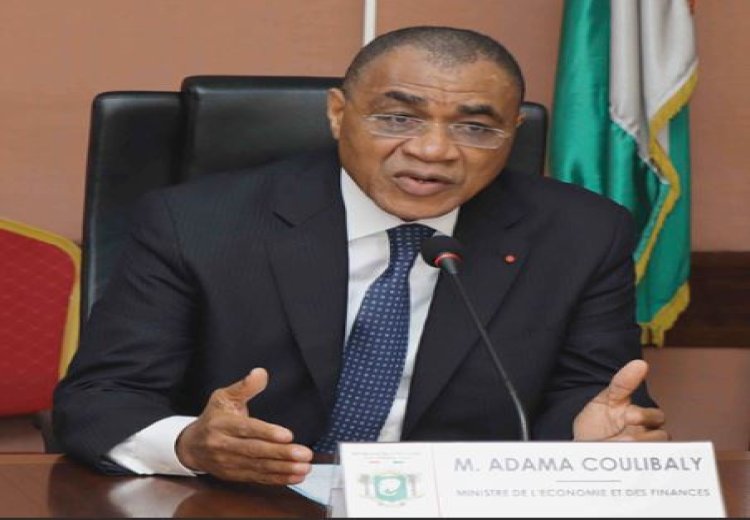
At the head of a large government delegation from Côte d'Ivoire at these high-level meetings, the Minister of Economy and Finance, Adama Coulibaly, chaired the annual meeting of the ministers and governors of the G-24 Intergovernmental Group, in his capacity as the group's chair, on Tuesday, 10 October 2023. Also present were, among others, IMF Managing Director Kristalina Georgieva and World Bank Group President Ajay Banga.
Following this important G-24 meeting, the Minister also held a press conference. Before making any remarks, he expressed his condolences and sympathy to Morocco, which was shaken by a devastating earthquake last month.
In his opening remarks, the G-24 chair stressed that, during this meeting, the G-24 had noted that the convergence of numerous crises and disruptions had clouded the global economic outlook and endangered stability worldwide. These included natural disasters and geopolitical tensions, a slow economic recovery, and a growing number of countries facing reduced access to financing.
However, Mr Adama Coulibaly welcomed the efforts made by the IMF to support growth through the Resilience and Sustainability Trust (RST; FFRD) and the Poverty Reduction and Growth Trust (PRGT; FRPC).
However, given the scale of the challenges facing countries, the G-24 called for “ an easing of the access conditions for the Resilience and Sustainability Trust ”. This would enable a larger number of countries to benefit from it.
In addition, the group's chair called for increased contributions to the Poverty Reduction and Growth Trust (PRGT; FRPC), which supports the poorest countries.
“ We continue to stress the need for a strong global financial safety net, at the heart of which would be an adequately funded IMF. We have called for a review of its surcharge policy, which represents a considerable financial burden for countries during periods of economic uncertainty ”, he said. He also returned to the IMF's 16th General Review of Quotas. The Ivorian Minister recommended that an agreement be reached on a revised formula for calculating quotas.
He also stressed the need to increase sub-Saharan Africa's representation on the IMF Executive Board, before welcoming the recent call to appoint an additional Deputy Managing Director at the IMF.
Regarding the World Bank Group (WBG; GBM), the G-24 welcomed the ongoing discussions on its evolution. It reaffirmed its core goals of eradicating extreme poverty and promoting shared prosperity, while helping developing countries achieve the Sustainable Development Goals (SDGs).
On the issue of rising debt, the group called for “ the cancellation of the debt of the most vulnerable and poorest countries, most of whose debt is owed to multilateral development banks (MDBs; BMD) and the IMF. We warn of a debt crisis that could stifle sustainable and inclusive growth ”, Minister Adama Coulibaly said.
In response to journalists' questions on this ongoing debate, the G-24 chair said it was time for the international community to revisit debt reduction programmes that had worked well in the past, notably the Heavily Indebted Poor Countries (HIPC; PPTE) Initiative and the Multilateral Debt Relief Initiative.
The G-24 chair said that, on taxation, the importance of international tax cooperation in establishing fair tax rules and generating the resources needed for investment in economic recovery, climate action and the SDGs had been highlighted.
Speaking to the press, the Minister said that international tax reform is essential to provide financial resources for investment in growth and, given its plan to allow greater inclusion in international tax cooperation and negotiations, we believe the outcome will be more democratic because it will enable all countries to take part in finding solutions to the crucial issues arising in international taxation.
On climate issues, the Minister urged all nations to fulfil their nationally determined contributions in accordance with the Paris Climate Agreement and to strengthen climate finance, particularly for mitigation, adaptation, loss and damage.
In addition, he expressed concern about the growing trend towards trade protectionism and the slow pace of reform of the global trading system. “ We encourage the strengthening of the World Trade Organization (WTO) in designing a strong multilateral trading system that benefits all parties and strengthens the role of trade in the global economy ”, he concluded.
It should be noted that, after a one-year term as G-24 chair on behalf of Côte d’Ivoire, Minister Adama Coulibaly will be succeeded by the Filipino Benjamin E. Diokno.
MEF Communications Department