Côte d’Ivoire: robust growth of 6,5% in 2023, despite persistent challenges
In 2023, the Ivorian economy recorded solid growth, with real gross domestic product growth reaching 6,5%, up from 6,2% in 2022. This performance was supported by a restrictive monetary policy implemented by the BCEAO, which helped keep inflation low, falling from 5,2% to 4,4% in 2022 and 2023, respectively.
Fiscal consolidation efforts were also evident, with the budget deficit reduced to 5,2% of GDP in 2023, compared with 6,8% in 2022. However, the current account balance deteriorated, with the deficit widening to 7,9% of GDP in 2023 from 7,5% of GDP in 2022, mainly because of imports of technical services linked to private investment in the oil and mining sectors.
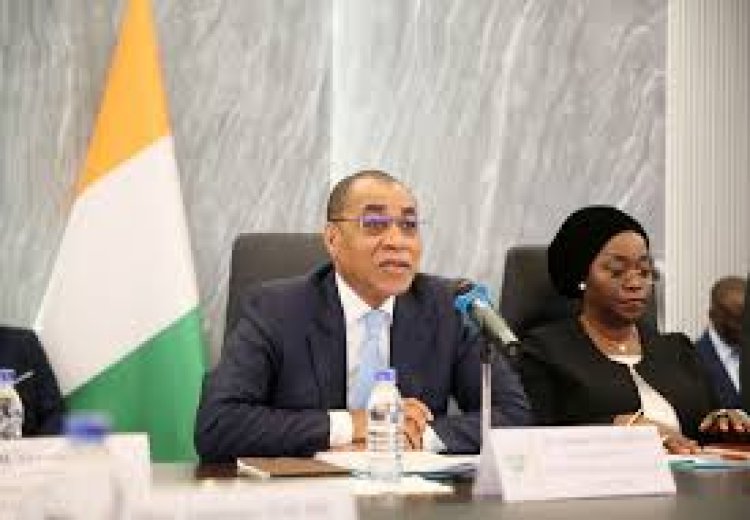
The Minister of Finance and Budget, Adama Coulibaly, attributed this economic performance to the five-year National Development Plan (PND 2021-2025), which had mobilised cumulative investment of 21 054 billion CFA francs (FCFA) by mid-2023, out of a total of 59 000 billion FCFA planned for the period.
These results were presented during the second review of the Economic and Financial Programme, together with the first review of the Resilience and Sustainability Facility (FRD), as part of the International Monetary Fund (IMF) mission to Côte d'Ivoire on 2 April 2024. The mission will conduct an in-depth analysis of recent economic developments and outlook, highlight potential fiscal risks and make recommendations on the necessary economic policy adjustments.
Source : SIKA Finance, Portail du Gouvernement, Rédaction Portail web MEPD