Côte d’Ivoire: rice self-sufficiency by the end of 2026
In West Africa, rice is the second most widely consumed cereal after maize. Several countries in the region are working to increase production in order to reduce their dependence on international markets.
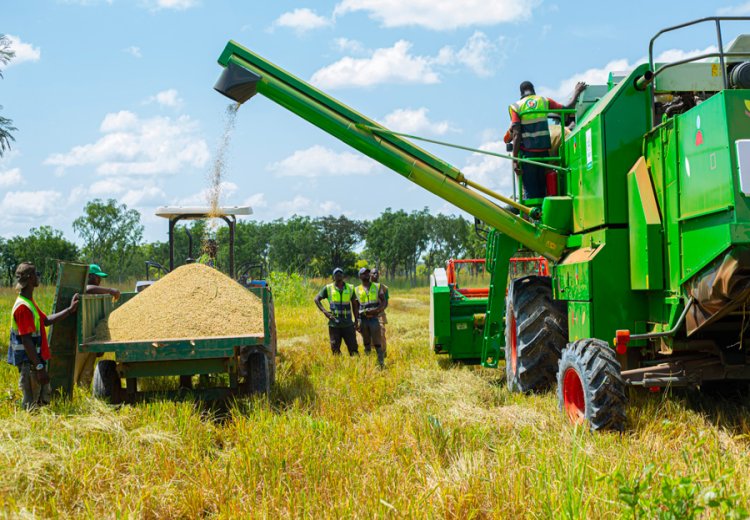
In Côte d’Ivoire, the goal of rice self-sufficiency is now envisaged for the end of 2026. This announcement, made on 24 February 2025 by Mr Kobenan Kouassi Adjoumani, Minister of Agriculture and Rural Development, postpones by one year the deadline initially set for 2025. Nevertheless, the minister is optimistic, pointing to a notable increase in rice production, from 900 000 tonnes between 2010-2015 to 1.3 million tonnes in 2023 and then 1.55 million tonnes in 2024. This progress stems from targeted investment in high-yield improved seeds and hydro-agricultural developments.
Despite this progress, achieving self-sufficiency remains a major challenge. Per capita consumption has risen by 20 % over the past decade, reaching 84 kg per year, according to data from the United States Department of Agriculture (USDA). While the authorities estimate that production of 2.1 million tonnes would be needed to meet domestic demand, the USDA puts actual consumption at about 2.5 million tonnes, while the Food and Agriculture Organization of the United Nations (FAO) estimates it at 2.8 million tonnes.
During the 2023/2024 season, Côte d’Ivoire ranked as Africa’s second-largest rice importer, behind Nigeria, with 1.6 million tonnes of milled rice imported mainly from India, Vietnam, Pakistan and Thailand. In 2023, the value of these imports exceeded 722 million dollars, according to data compiled on the Trade Map platform.
In this context, observers estimate that domestic production will need to increase by nearly 55 % by 2026 for the local value chain to meet domestic demand.
More broadly, Minister Adjoumani’s statements are part of the new “National Strategy for the Development of the Rice Sector” (SNDR 2), announced by the government last July. This plan, with a total cost of 1.3 billion dollars for the 2024-2030 period, aims to produce 3.2 million tonnes of milled rice by 2030. The first phase, allocated 546 million dollars, will run from 2024 to 2027, while the second, with a budget of 770.7 million dollars, will cover the 2028-2030 period. Priority areas include expanding cultivated rice areas, improving water resource management and increasing yields.
Source : Agence ecofin, Portail web MEPD Editorial Team