Côte d'Ivoire: Emerging Leader in Global Natural Rubber Production
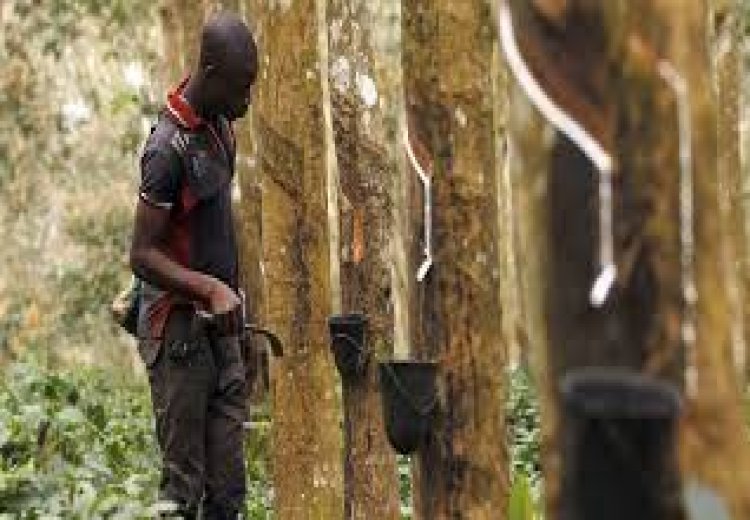
As the world's two leading natural rubber producers, Thailand and Indonesia, see their output decline, Côte d'Ivoire has stood out by taking third place globally, overtaking Vietnam. In 2023, Côte d'Ivoire produced more than 1,6 million tonnes of natural rubber, marking an increase of 25% compared with the previous year. With this performance, Côte d'Ivoire accounted for 12% of global production, out of a total of 13,9 million tonnes.
Indeed, an 8% drop in production in Thailand and an 18 % drop in Indonesia led to an overall 3 % reduction in global natural rubber production. At the same time, global demand, driven mainly by the tyre industry, also fell by 1%, reaching 14,1 million tonnes, a level very close to overall supply.
Previously ranked fourth, Côte d'Ivoire now leads Africa in natural rubber production, accounting for nearly 80 % of the continent's output. However, the country faces a major challenge: the low level of local processing of its production. Although the rubber value chain generates more than 350 billion USD (211 612 billion CFA francs (FCFA)) worldwide, only 0,5 % of this amount benefits Ivorian producers.
Since 2021, the Ivorian government has implemented an ambitious strategy aimed at locally processing 100 % of natural rubber production by 2025. The measures taken are beginning to bear fruit. In November 2023, the Rubber and Oil Palm Council banned exports of raw natural rubber to ensure supplies for local industries, which have recorded significant growth.
The rubber sector in Côte d'Ivoire is supported by several major companies, including the Société Africaine de Plantation d'Hévéa (SAPH), the Société des Caoutchoucs de Grand-Béréby (SOGB), the Manufacture du Caoutchouc de Kossihouen (MCK SA), the Société de Développement du Caoutchouc Ivoirien (SDCI) and Sud Comoé Caoutchouc (SCC). These companies play a crucial role in processing and adding value to Ivorian natural rubber.
In short, Côte d'Ivoire is positioning itself as a key player in the global natural rubber market. Its rise and efforts to increase local processing of its production illustrate a proactive and forward-looking economic strategy. The success of this strategy could not only strengthen the Ivorian economy, but also significantly improve local producers' incomes, creating sustainable added value for the country.
Source : SIKA Finance, Rédaction Portail web MEPD