Côte d’Ivoire: Debt Policy Drives Investment
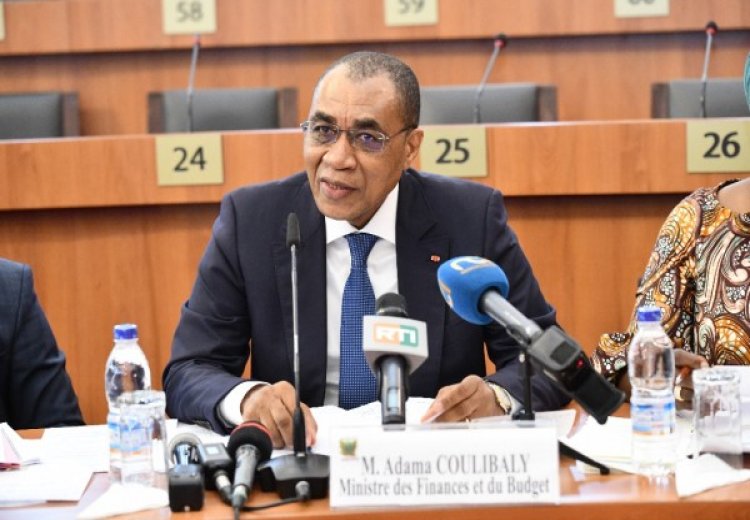
For several years, Côte d’Ivoire’s international standing has been underpinned by a remarkable economic development trajectory. At the heart of this progress is a government policy focused on strategic investment and prudent debt management. These key elements were reaffirmed in recent statements by the Minister of Finance and Budget, Adama Coulibaly, before the National Assembly of Côte d’Ivoire’s Economic and Financial Affairs Committee (CAEF).
The Government’s representative saw his case crowned with success when the draft national policy on borrowing and public debt management was unanimously adopted. Comprising 62 articles divided into seven titles, this ambitious draft embodies the State’s determination to finance its needs while preserving the country’s financial stability.
During this parliamentary session on Tuesday 26 March 2024, Minister Adama Coulibaly confidently explained the sustainability of Côte d’Ivoire’s debt, countering persistent concerns. While noting that some African countries have very high debt ratios (92% for Ghana, 76% for Senegal, a WAEMU country, 71% for Morocco and South Africa), the Minister demonstrated that current debt, although substantial at 25 000 billion CFA francs (FCFA), or 58% of GDP, remains sustainable (the WAEMU standard is debt below 70% of GDP). Even more significant is the vote of confidence from international institutions such as the IMF and Moody's. The IMF, in partnership with the World Bank, has regularly affirmed the sustainability of Côte d’Ivoire’s debt, while Moody's has placed Côte d’Ivoire at the same level as established emerging economies such as South Africa and Morocco.
This confidence among international investors is reflected in a substantial flow of investment into Côte d’Ivoire, reaching the impressive sum of 19 000 billion FCFA. This investment is distributed across various sectors, from education and health to infrastructure and basic services. Its tangible results can be seen throughout the country. The education sector has expanded spectacularly, with the number of schools doubling (nearly 500 upper secondary schools and colleges) and a significant increase in the enrolment rate, to 94%. In health, hospitals and health centres have been built across the country, improving access to health care for millions of citizens (75% of the population is within 5km of a health centre).
In addition, access to drinking water (coverage rate 90%) and electricity (coverage rate of 86%) has also expanded considerably, improving the quality of life and economic prospects for many communities.
Côte d’Ivoire is firmly positioning itself as an emerging player on the global economic stage, guided by a strategic vision, prudent debt management and judicious investment. As the country continues along its development trajectory, it appears poised to realise its full economic potential and open up new opportunities for its citizens and investors.
Source : Agence Ecofin, Web Portal MEPD Editorial Team