Africa Cup of Nations (CAN) 2024 in Côte d’Ivoire: major economic opportunities at stake!
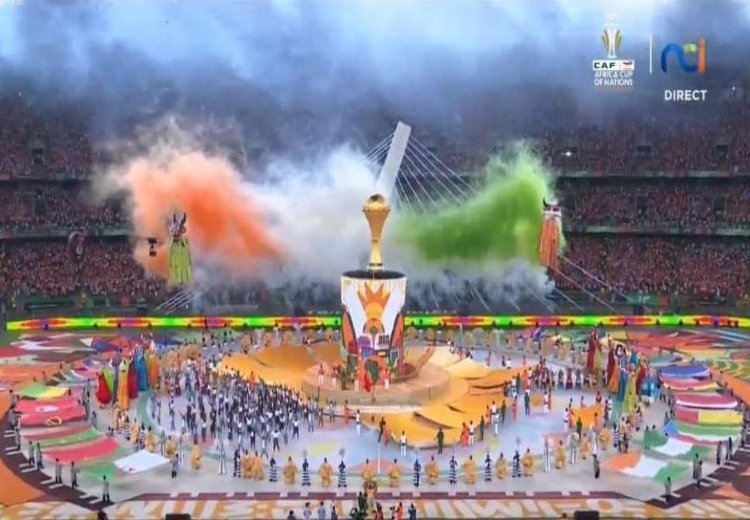
The 34th Africa Cup of Nations (CAN) 2024 in Côte d'Ivoire kicked off on Saturday 13 January 2024 at Ebimpé Stadium in Abidjan. This sporting event, which attracts thousands of supporters from across Africa and beyond, represents a major economic opportunity for the country. Foreign media report a positive impact on several sectors of the Ivorian economy, including tourism.
For dakaractu.com, a Senegalese daily, the CAN (Africa Cup of Nations) is a ‘ driver of national unity and an economic accelerator ’. In terms of tourism, it reports that hotels, restaurants, transport services and other related sectors will benefit from the influx of visitors, leading to an increase in tourism revenue and the creation of temporary jobs.
The French daily lemonde.fr adds that expectations of economic spillovers are highest in Côte d’Ivoire’s tourism sector. The newspaper highlights the ambitious programme known as “Sublime Côte d’Ivoire”, costing 3200 billion CFA francs (FCFA) (4,8 billion euros), which aims to develop foreign tourism. Launched by the Ivorian government in 2019 and co-financed by the State (1 500 billion CFA francs) and the private sector (1 700 billion CFA francs), this programme aims to propel the country into the top 5 African destinations and make it a ‘ leading African business tourism destination ’. In addition to modernised seaside resorts and developed tourist routes, major real-estate projects are under construction, such as the luxury hotel complex ‘ Serena village ’ in Abidjan and the ‘ Abidjan Business City ’ tower, which is set to become a hub of the Ivorian and regional economy.
CAN in Côte d’Ivoire also offers an opportunity to upgrade sports and economic infrastructure. ‘ A diplomatic showcase and a source of influence, CAN must also be a driver of growth for the country ’, the French newspaper continues. It notes that the country has undertaken large-scale works. In total, the State has invested more than 500 billion CFA francs (approximately 760 million euros). Four ‘ultra-modern’ stadiums were built in Ebimpé (in the suburbs of Abidjan), San Pedro (south-west), Yamoussoukro (centre) and Korhogo (north). Two others were renovated in Abidjan (south) and Bouaké (centre), and 24 training grounds were laid out. At the same time, the roads linking the host cities were rehabilitated to facilitate travel by teams and supporters. The Abidjan-Yamoussoukro motorway was extended to Bouaké, and the road linking Abidjan to San Pedro was modernised.
To sum up, ‘ the construction and public works (BTP) sector benefited from the CAN. Steelworks, in particular, are operating at full capacity ’.
Press review – Web Portal project team (15 Jan 2024)